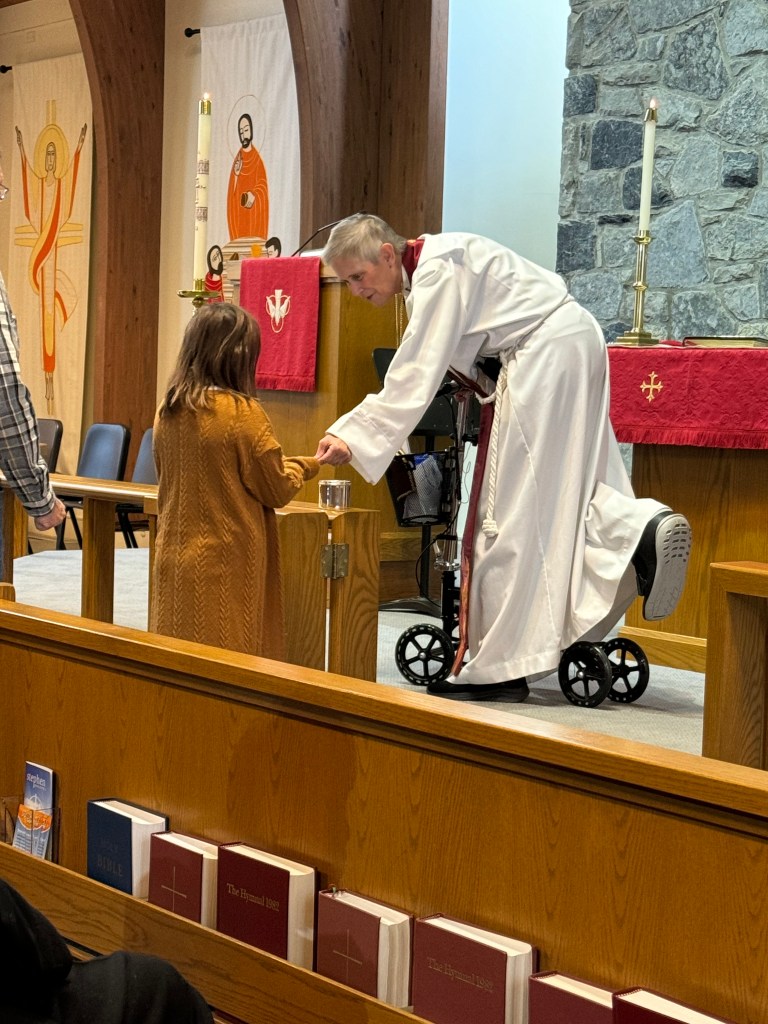
Do you want to read a self-indulgent essay on how being consigned to three – four months in an orthopedic boot has changed my life? (PS, I’m only at the beginning of Week Three.)
Do you really care about:
- the new difficulty of my putting a casserole dish in the oven without risking life and limb?
- my growing affection for a good “grab bar” in a handicapped bathroom?
- the fact that I have poured coffee on my new living room rug twice now, because pouring from the thermos that fits in my scooter basket into the coffee cup that I prefer to drink from in my “recovery bed” is a drippy proposition and the coffee ends up running down my arm and onto the new beige Berber carpet?
(I care, but you shouldn’t.)
Are you sick of my
- whinging about a temporary affliction that I brought on by myself with elective surgery?
- hearing about how many days (or weeks, now) it’s been since I’ve taken a shower?
- looking at my forlorn, sad face pressed up against the window to see the Supermoon or hearing about the way that I wheel over to the back door and crack it open to inhale the fecund aroma of wet leaves in the autumn that I am “missing?”
(I’m sick of it, and you should be, too.)
Instead, here are some second level things to think about:
- My doctoral degree in the “Theology of Disability” has taken on a new meaning for me in these past few weeks. Years ago, I pursued an advanced degree in Congregational Development but ended up taking a side road into the world of Differing Abilities when my ministerial work found me working with young people on the Autism Spectrum. I cared about how children and their families were embraced (or not) by the church which, for the most part, did not accommodate different learning styles and neurological divergence. With a partner in Christian Education, we created a program called Rhythms of Grace which used a format of “reverse inclusion”: the worship service that we designed was oriented to support many different learning styles and allowed for therapeutic intervention in the context of a Christian community as well as formation and sacramental nurture. We told bible stories in interactive ways. We used felt boards and sand tables and the dramatic arts. We used modelling clay and large tubs of dried beans and small trampolines to encourage kinesthetic awareness. We had a tiny pup tent set up in the corner of the room each time we gathered. The pup tent was filled with dolls and blankets and soft toys for times when our parishioners needed to just get a way for a moment, to self soothe or to watch from a safe distance. We sat on the floor around an upturned apple crate and celebrated the holiest of communion services with gentle words, familiar songs, and apple juice and rice crackers. God was made manifest to us. Parents felt included and supported. Children were welcomed. A community was born.
These were profound years in my own spiritual development, and I loved the ministry of Rhythms of Grace.
Today, though my malady is purely physical, I am able to understand just a tiny bit better about the anxiety of wondering about welcome and accessibility and if I will be able to “do the thing” that I want to do in the space that has been established before my arrival. Temporary physical disability is much different than negotiating culture with neurodivergence, but I have had just a taste of my own anxiety about fitting in which, I can imagine, for parents of neurodivergent children considering attending a traditional church service, they must feel in spades.
2. Mary Oliver has a poem in which she writes about the “soft animal of your body.” The poem, “Wild Geese” is about turning away from self-centered focus on one’s one problems and suffering and, instead, to marvel in the grandeur of creation and to be lifted up by the liberation of “loving what we love” and not agonizing over what is not or what we “should” be.( Note to self: the poem has a good message for me right now) but that phrase: “the soft animal of your body” has resonance for me in these days of my minor infirmity.
My body and I: it is a complicated thing, our relationship. I revel in being hale and hearty. I have always agonized over the size and shape of my body. This process of surgery has made me feel vulnerable, has exposed elements of my aging that, while “normal” have been alarming to confront (loss of muscle mass, the need to pay attention to my blood pressure for the first time in my life, the natural decline of balance and dexterity which comes with aging but can be treacherous when navigating on crutches…). All of this has been so much. I don’t want to be infirm.
I am used to hiking with a 30-pound backpack for hours. I can live in the woods for days. I don’t take pills. I eat well. I walk miles and miles and breathe in wholeness in nature. This “soft animal of my body” is now old and tired and weak. I hate that.
I did some chair yoga last night. I’m not ready to submit.
3. I am struggling with performing my “role” (doing my job) from a compromised physical state. I serve at the top of my “organization” (church diocese) as the “CEO” (bishop) and carry with me a great deal of authority (much of it given to me by my parishioners, some of it given to me through the canons) when I enter a room. I preach the Word of God from a pulpit, choosing my words carefully for impact, using gestures to support my words, and working to share something that we call “Good News” that is for our very salvation. It is hard to do that sitting down.
We bishops wear robes, and pointy hats, and carry symbolic sticks (croziers) that show our call as pastors to care for our people. Those sticks, when used by real shepherds, pull sheep out of tricky places, prod them along to where they need to be, and fend off the enemy. I feel disempowered to care for others when I myself am in such need. I can’t even carry the stick while maneuvering my scooter (not to mention the ungainly way that I have to fold up my long robe so it doesn’t become, literally, wrapped around the axle.) I am questioning hard- and not for the first time- the efficacy of these (silly) symbols.
As a woman, I experience already a certain cultural pressure to be at the top of my game all the time- to be whole and just and level-headed and non-anxious in my leadership of my staff and our diocesan system. It’s hard to feel centered, emotionally and on my leadership game when I am physically weakened. That soft animal of my body.
4. A praying person- by nature and in discipline- I am surprised by the shift in my spiritual wellbeing. I am abandoned to such base needs- moving from one place to another, planning minutes in advance to hobble to the bathroom, strategizing something as basic as making a cup of tea and carrying it to my chair- that my formal devotions are on hold. I haven’t read Morning Prayer. I haven’t wanted to read Morning Prayer. It is usually my foundation for the day. I have lost discipline in spiritual things while managing things earthly. I will discipline myself to “begin again” (Benedict) in Advent.
And so, for now, I pray by looking at the stars out of the window as I wake, it seems, on the hour. I pray listening to the owls carrying on their nighttime woodland conversation. I pray in thanksgiving for the distraction of books and podcasts, of the Great British Baking Show, and of the endless supply of email that makes me feel, even though I am sitting still, that I am actually doing something.
Second level lessons, I suppose.
How many levels are there, I wonder?
 Our selves, our souls and bodies