2026 Part 2

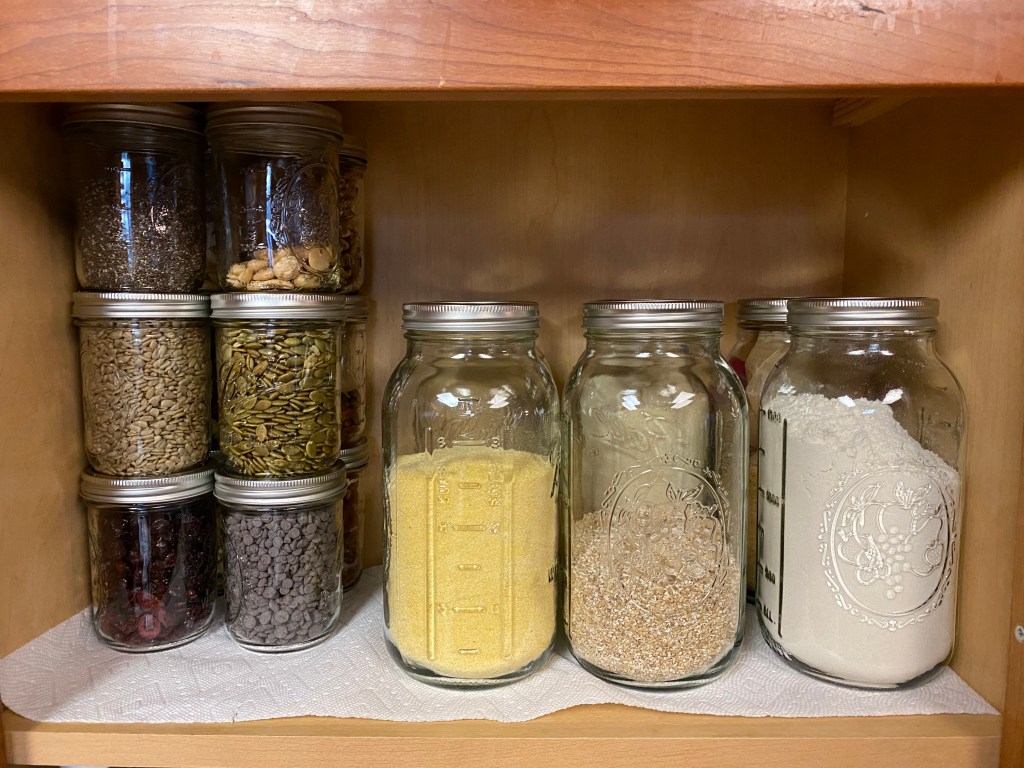
home pantry 2022

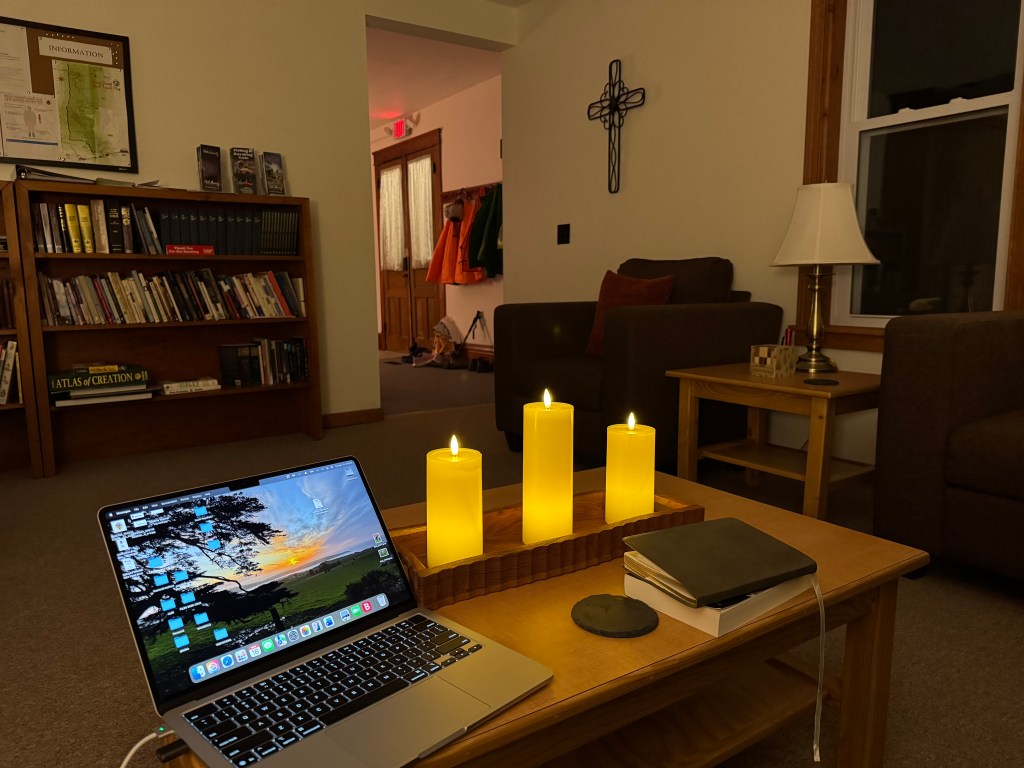
I’m down here in my prayer shack working to claim a few minutes- maybe even an hour or more- away from email and phone calls. It’s Friday afternoon and my two sermons for the weekend are finished. I came down for a cup of tea, to make a fire in the wood stove, and to listen to the rain fall on the tin roof. I love it here in my little hermitage. It is peaceful. There are woods outside all of the windows and my faithful cat Wobbles (he’s really more of a dog than a cat) sits outside and waits for me. In inclement weather he hides out of the rain under the shed. I’ve tried to invite him into this 80 sq. ft. space but it’s too tight for him. He yowls at the door until I let him out.

It was about 48 degrees when I arrived a while ago. Because the space is so small it only takes about 20 minutes to get a roaring fire going that heats the place up to toasty warm. The thermometer on the wall tells me that it is now 71.

This is Part 2 of my Plan 2026. As I wrote in Part 1, each year I come up with a challenge to stretch myself. Not a resolution, per se, but a challenge to see what it is like living in some different capacity. I hinted around in the Part 1 post at this year’s challenge and am ready to “speak” to it, now, with some clarity.

The 2026 Plan: In 2026 I will not consume any ultra processed foods.

On the occasion that I am a guest in someone’s home or church, I will eat the foods that are prepared for my enjoyment. My aim is not to be elitist or judgmental about others’ food choices or to eschew hospitality, but to create some parameters for myself when I am the one standing at the stove or pushing the cart around the grocery store. I don’t see this an an expression of “orthopraxy,” (a form of disordered eating) as much as a social experiment, kind of like when I tried living for a month and feeding my family on the amount of money given to a family of 4 in SNAP benefits. I do believe that there will be health benefits for me in this and, if I happened to lose some weight or lower my blood pressure or cholesterol in the process, I would not complain. But that’s not the sole goal.

Before I explain more about what it means not eat ultra processed food, let me add that this post will not be put on Facebook or shared widely. This blog has but a few subscribers and so it’s more of a record for me than some great announcement or news that needs to be broadcast across the diocese. It’s personal, but there is something about a handful of subscribers that can keep one accountable. (I also prefer writing when I think that someone besides me is going to read what I write- it is oddly motivating knowing that someone is out there, but not so much that I tend to the finer points of grammar or punctuation…sorry.)

So what makes food processed, minimally processed or ultra processed?

Corn on the cob is not processed.

Peas in the shell, broccoli on the stalk, eggs from the neighbor… are not processed. They are foods that are “just like God made ’em.”

Minimally processed foods are those that have been “handled” but without the addition of anything besides their own ingredients, like…

Cornmeal (corn ground into meal)

Whole milk that has been pasteurized.

Beef from the farm down the road that has been slaughtered, inspected, and aged in the butcher shop right on the premises.

Those are pretty easy.

Marion Nestle, author of What to Eat (2007) and What to Eat Now (2025) explains other categories as have been determined by NOVA, the brainchild of a Belgian nutritionist. Unprocessed and Minimally Processed foods are the first category. Then there are Processed Culinary Ingredients (oils, sugars, butter, flour, salt). The third category is Processed: canned, fermented, cured and cooked foods (often with processed culinary ingredients added) and the fourth category is Ultra Processed: industrially manufactured products usually containing nonfood additives used cosmetically to impart color, flavor or texture, along with culinary processed ingredients. (What to Eat Now, Marion Nestle, North Point Press, 2025,pg. 28-29.) Think Pop Tarts. Frozen macaroni and cheese. Tater tots. Doritos. Most brands of ketchup and other beloved condiments.

Nestle goes on to say this: “Ultra processed foods are industrially produced, contain additives that you cannot easily find in supermarkets, and are designed to be irresistibly delicious…If you are not sure if a food is ultra processed, consider whether you could make it in your home kitchen. If you can, it is unlikely to be ultra processed.” (pg. 29)

Nestle’s book is 750 pages long. Its subtitle is “The Indispensable Guide to Good Food, How to Find it, and Why it Matters.” I won’t give you more of Marion Nestle here, but I commend the book to you.

Putting food on the table that is minimally processed has a number of benefits, as I imagine them:

Food cooked from its “whole” state is generally more affordable.

The process of “cooking from scratch” requires us to slow down a bit. The “convenience food” industry developed as our time at work and away from home became greater and greater, because of societal demands. Because of my job, this “slowing down” comes by spending most of my day off in the kitchen, preparing food for the week ahead. I love it. The radio is tuned to the classical music station WHYY in Philly, the kitchen warms up, and at the end of a long morning I have most of the week’s food prepped and in the fridge (ask my husband about the threatening sticky notes that say “for Wednesday dinner! Don’t eat!, etc.)

Eating whole foods is better for one’s health. I’m not a scientist but I am pretty sure that brown rice is better for you than Cheetos, and a bowl of steel cut oats with a little almond butter is going to do you better than a frosted blueberry Pop Tart.

I’m looking forward to working my way through Nestle’s updated version of her book so I can understand more about what is, now, mostly intuition for me.

I have been known to enjoy a Pop Tart from time to time, mostly on the trail, but overall, I don’t think that this will be too difficult. It has, already in just the first week of 2026, gotten me to look more closely at labels and to put some things back on the shelf: a brand of pasta that I usually buy has some preservatives added to it, lots and lots of foods have added sugar in them, and, if there are ingredients that I can’t pronounce or buy to add myself to the food that I’m cooking, it’s not coming home with me.

Let’s see.

A few updates from time to time maybe, but that’s the Plan 2026: Little House on the Prairie meets my Mechanicsburg Kitchen?

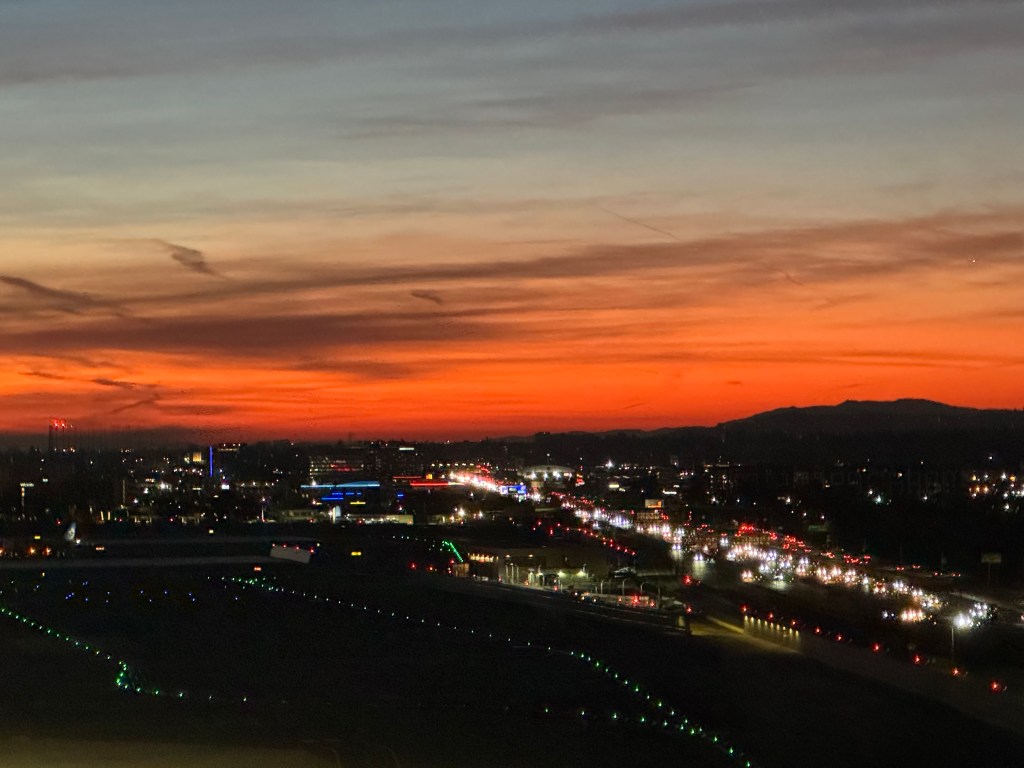
Sunsetting the Sunrise Project

San Francisco airport Hyatt, 2 January, 2026

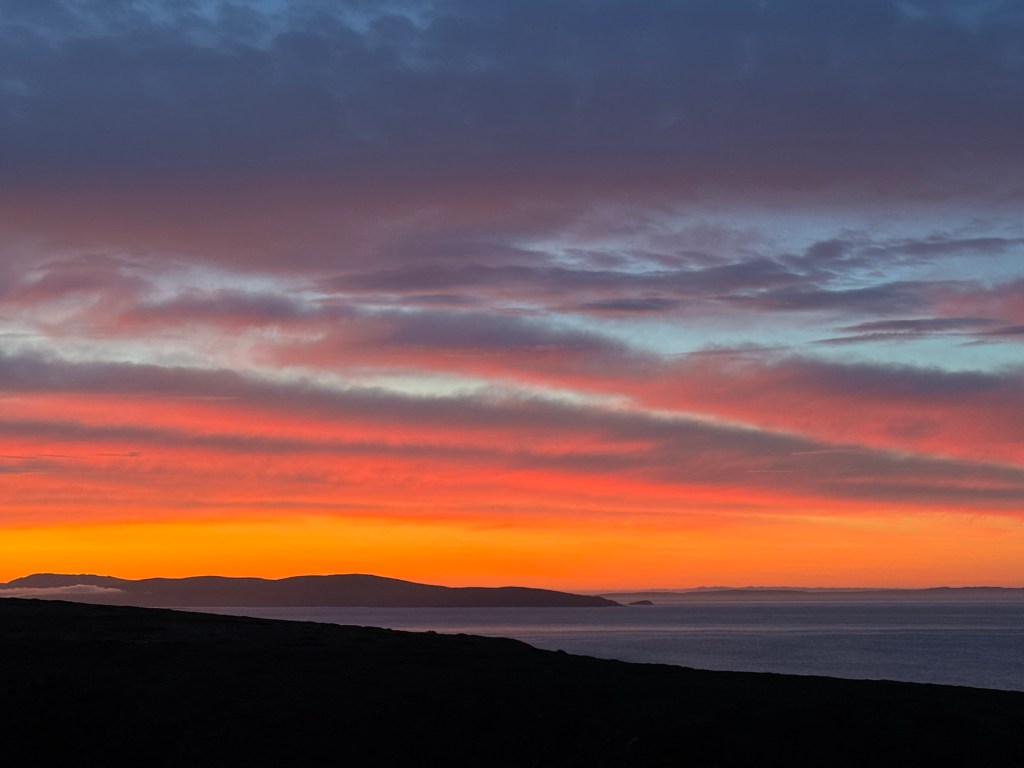
I couldn’t resist this morning’s sunrise. I got up, turned all the lights off in our hotel room and snapped this photo while Glenn was in the shower. We are headed home to Pennsylvania this morning after a glorious week in Sonoma and Bodega Bay with our girls, their husbands and our three West Coast grandchildren.

Last year, I took a similar picture from the same hotel on the same day:

San Francisco airport Hyatt, 2 Jan, 2025.

The picture that I took on Jan 2, 2025 was the second in a series of photographs that would run for the whole of 2025, capturing the dawn each day.

Here is the sunrise that started the whole thing: I took this from our bedroom in Bodega Bay at the dawning of 2025 on January 1:

Bodega Bay January 1, 2025 Sunrise

I mean, after a display like that… who wouldn’t want to capture day after day of spectacular morning light shows?

I took photos wherever the dawn found me- all over the diocese in Central Pennsylvania, in Maine, Massachusetts, Florida, Georgia, Texas, California, Missouri, Virginia… and Quebec, Canada and the Dominican Republic.

When on a work trip I used my iPhone compass as I settled into a hotel room in the evening to determine where I’d have to look in the morning. On more than one occasion I wandered through a hotel lobby in my pjs and out to the parking lot to capture the moment.

Most of my pictures were taken from our front porch that faces East, or on my morning walk around the neighborhood. I have lots and lots that look like this:

October sunrise from the front porch, Brindle Road, Mechanicsburg

And, of course, not every day dawned in shades of pink-orange-red-yellow. I have lots that look like this:

12 February, 2025 Mechanicsburg, PA

.

Every day, you ask? Every single day? Well, almost. I missed one day: 19 October, 2025. We were at our diocesan convention. It was Saturday morning. I was reviewing notes for our business meeting, drinking coffee and … distracted, I guess, is the best way to put it. I missed taking a photo. It’s said that it takes only 21 days to form a habit, but here I was, towards the end of October, more than 10 months into this project and… the morning photo completely eclipsed my mind. So much for habits. Later that morning, though (call it coincidence or even a “God moment,”) one of our diocesan priests approached me at a break in the meeting and waved her phone at me. “You know how you take a picture every morning of the sun coming up?” she asked me, “Well, this morning’s sunrise was so pretty that I pulled over on my way to this meeting and took a picture to show you. Here.” She put the phone in front of me and, sure enough- pinkish orange streaks against an agate background. “I’ll send it to you, ” she offered, not knowing that I had missed taking my own photo that morning. I thanked her and told her that she’d saved my “every day” streak…

At Easter this past year I was invited to attend the Easter Vigil at St. Andrew’s in York. They do it the old school way at St. Andrew’s, gathering before dawn on Easter morning outside around a fire. I made the short drive on the turnpike from our house to York in the pitch black and, as I was driving, I had an uncanny sense of connection with the women in the scripture story who made their way to the tomb “while it was still dark” (John 20) to tend to the body of Jesus. Of course Jesus wasn’t there when the women arrived. He had risen. When I arrived at York, we stood around the fire ring and kindled the new fire of Easter and then we processed into the church where we sat in candlelight and heard the beginning of the story of our salvation. I had been invited to preach at the service and spoke about the theme of darkness and light, of death and resurrection, the dawning the day and the dawning of our faith. I told them about my Sunrise Project. In my preparation for that sermon I learned that there are really three stages of dawn or twilight- the time just before the sun rises at dawn that marks the transition from night to day.  There’s Civil, Nautical and Astronomical Twilight. These vary depending on how many degrees- 6, 12 or 18- degrees below the horizon the center of the sun sits before dawn. These three grades of twilight are defined by how much you light you need to perform the function that you want to do: Astronomical Twilight allows for star gazers to still have a good view of the night sky and its stars, Nautical Twilight- is a bit brighter, allowing for navigating at sea, and Civil Twilight is the amount of light that you need to move around in villages and cities in order to get where you need to go without bumping into things. These are, perhaps, subtle distinctions but they pointed out to me that rather than taking pictures of the sun rising, I was really taking pictures of the liminal moments just before the sun comes up.. which, I discovered, is all about hope and faith.

In the sky at twilight- whether it hints at a glorious color show or a muted, soft lightening of the sky- there is hope. There is possibility. There is the edge of discovery and delivery. And that is faith.

As it turns out, my 364/5 days of picture taking was an exercise in faith. Standing in the parking lot of the Hampton Inn in Somewhere, Pennsylvania… on the beach in the Dominican Republic… on a pre-dawn walk through sleepy Old Quebec…. or standing barefoot on our front porch in the quiet of our neighborhood, I had hope and faith that God would deliver another day and another opportunity for me to live and breathe and have my being. What a privilege to draw breath and to live our fragile lives. Each day of this project reminded me of the grace of God in the gift of life and the opportunity, as the Benedictines say, to always “begin again.”

My project for this new year, 2026, is focused more on my health and social issues of food and food production so I don’t expect it to be as pretty as Project Sunrise 2025.

In closing, here are a few more to share from 2025:

Quebec City July 2025
Along the Appalachian Trail near Port Clinton, PA August 2025
December 2025 Mechanicsburg, PA
Dominican Republic September 2025

from inside”Viriditas,” my “prayer shack” in Mechanicsburg, PA Feb 17, 2025
Williamsport, PA 21 December, 2025

“Arise, shine, for your light has come, and the glory of the Lord rises upon you.” – Isaiah 60:1

Next Year’s Plan

Part One:

Every year I choose a challenge to take on for 365 days. In recent years, these challenges have included reading the top 100 Great Books (according to one list I found), sleeping outside in a tent at least one night per month, not drinking alcohol, adhering to a vegetarian diet, adhering to a vegan diet and, in this past year of 2025, taking a photograph of the sunrise every day.

My success rate is pretty good. I’m a disciplined person and when I set my mind to something, I generally stick with it. (The trouble is setting my mind to it…sometimes the things that would be the healthiest options for me are not the things on which my mind is easily set.). Of the examples given above, the only one that I failed at was the Great Books challenge. I veered off course in the middle of Don Quixote but did, before that and to my great amazement, make it all the way through Joyce’s Ulysses– admittedly doing only a cursory reading. My sister-in-law Joanne is part of a two-year study group in Cambridge, Mass that is parsing Ulysses one small bit at a time and, no doubt, getting infinitely more out of it than I did, tied to an armchair every morning for a half hour for months on end.

I have literary aspirations- I want to read more Charles Dickens, all of Shakespeare’s plays and sonnets, and more John Donne than I’ve got under my belt. I’d love to re-read some classics that I read in a hurry as an undergrad (English Lit minor) and barely understood- Faulkner, Woolf, Steinbeck. Reading George Eliot’s Middlemarch on a beach in Puerto Rico during spring break in my Junior year was an especially weird and unsatisfactory experience. I’d also like to break from my provincial English and (white) American framework and read authors from other parts of the world and of different racial and ethnic groups. I remember that when I traveled to Sri Lanka a few years ago I was encouraged to do some reading ahead of time and learn about the Sri Lankan Civil War and the great tsunami of 2004. I read the works suggested to us and I loved how I was able to connect and learn in advance of the trip.

But this year, I am drawn, again to consider my diet and food as I plan my 2026 challenge.

For some time- decades, really – I’ve had an interest in food production as it relates to our environment and our health. I remember reading Diet for a Small Planet when it first came out in 1971 ( I was in Junior High) and I read the 50th anniversary edition when it was released in 2021. Its focus on food choices and how they relate to global environmental and social issues struck me as a young teen and still makes me think as I sit down to plan our weekly menus. In 2006 I read Marion Nestle’s What to Eat – a seminal work in learning about food production and how to eat healthfully- and I just got her updated version, What to Eat Now, that came out this year. I’ve also been captivated through the years by the importance of food and dining as a cultural focus, enjoying classic works of MFK Fisher and her Italian equivalent, Patience Gray.

Some of my interest has to do with having worked as a cook and caterer for several years when I was just out of college. And, as I became more interested in theology and Christianity as a practice and profession, it was not lost on me that food, hospitality, and gathering together in community is also central to a life of faith. The focus of our weekly ritual in church, after all, is a meal… a heavenly banquet at which we are nourished and fed by Christ himself!

Another theme that is hard to ignore is … aging. In my seventh decade, now, I’m all too aware of how one’s body begins to betray oneself and the increased efforts that are needed at “upkeep” if longevity and mobility are among our personal goals. I do want to remain active and mobile and agile. I do want to be sharp witted and aware. Food -and exercise- are key components of any plan to remain active and healthy in one’s advanced years. In the past few years I have lost flexibility, strength, and have – through the indignities of menopause- lost most of my hair. Today, I have a physical shape that could best be described as “pudding in a sack.” (Credit to my husband for that descriptor but relax, he’s not said it in reference to me.) And finally, as someone who never took more than a vitamin or a couple of Tylenol for the first 65 years of my life, I find that I am now on both blood pressure medicine and statins for unhealthy levels of “bad” cholesterol. For the first time I have one of those plastic 7-day pill boxes that sits on my bathroom counter, taunting me. Ugh.

I want to hike the rest of the Appalachian Trail when I retire in 2027.

I want to be healthy for my children and grandchildren.

I want to travel, to garden, to hike, and to live on… healthy and strong.

I’m still concocting the specifics of the 2026 plan, but stay tuned. Details to come in a next entry.

Letters from Brookland (4)

Dear friends,

I just got home (to Mechanicsburg). It was a long drive (3.5 hours) but a few podcasts kept me going- and a little coffee.

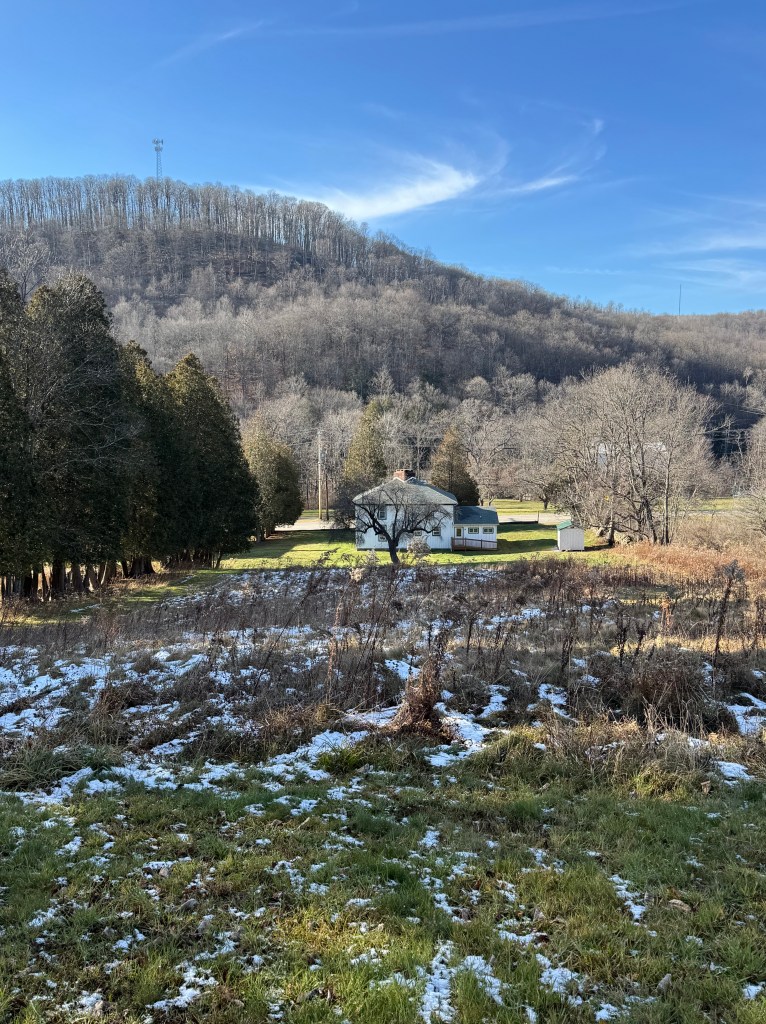
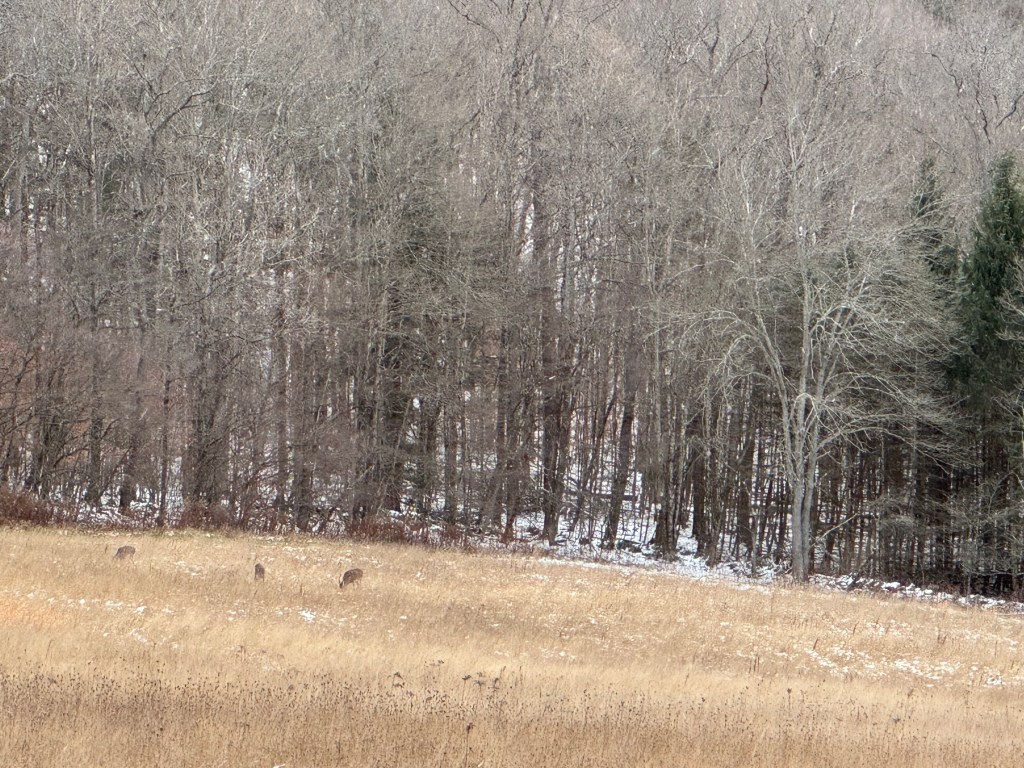
I’m happy to be home, of course, but already missing the BRC. It is such a special place- a place apart that, without even trying, gives you a new outlook on life. The rhythm of the country, the rising and setting of the sun, the surprise of a coating of snow that glistens on the lawn, the call of a coyote in the early morning, deer grazing with their heads down in the middle of the field- it is all a joy.

I took an early walk this morning back up Horseshoe Road. It’s a dirt and gravel road that goes up and up and up to the ridge on the other side from the Brookland Retreat Center. I passed neighbor Darryl’s house as I set out and he called good morning to me and shouted that he “hadn’t seen a bear in a few days,” up the direction that I was headed. I wondered to myself how fast I could run in my heavy hiking boots.

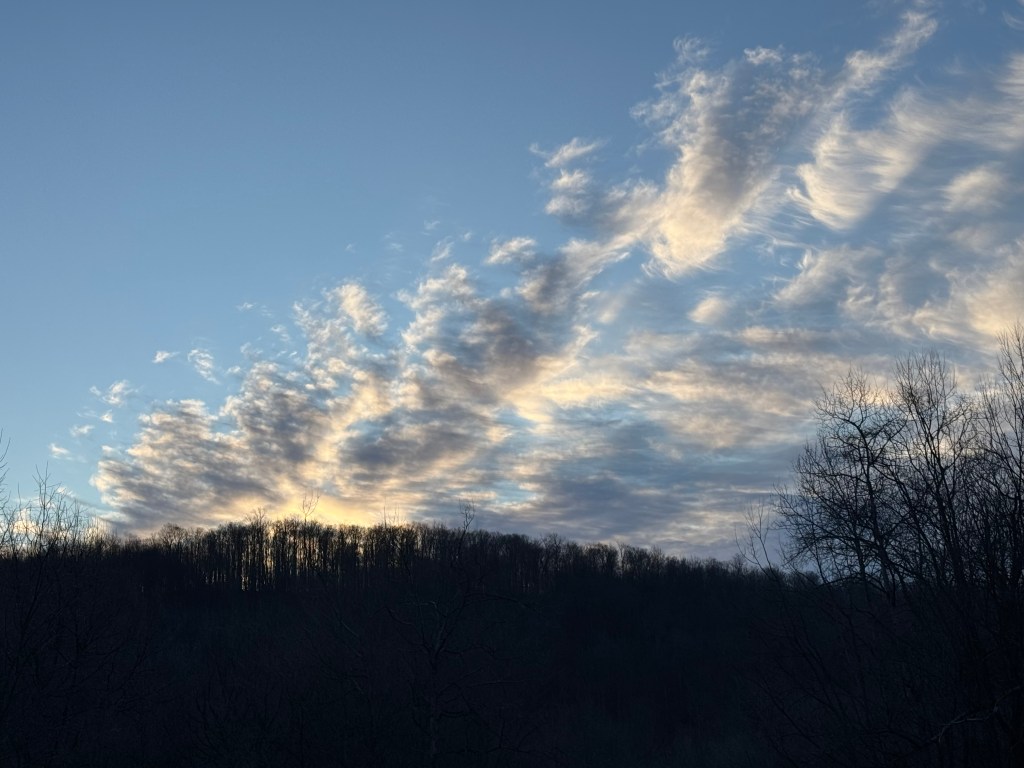
I saw no bears. Just stands of pine trees, the creek running, a few empty camps, and a blue sky streaked with clouds.

On the way back I hurried a bit- we were set to read Morning Prayer in the Chapel at 8:00 AM as was our pattern, and we were hoping that a friend and parishioner from Coudersport would join us. She did! We “topped out” at FOUR people this morning as we said our prayers; it was a joyful chorus.

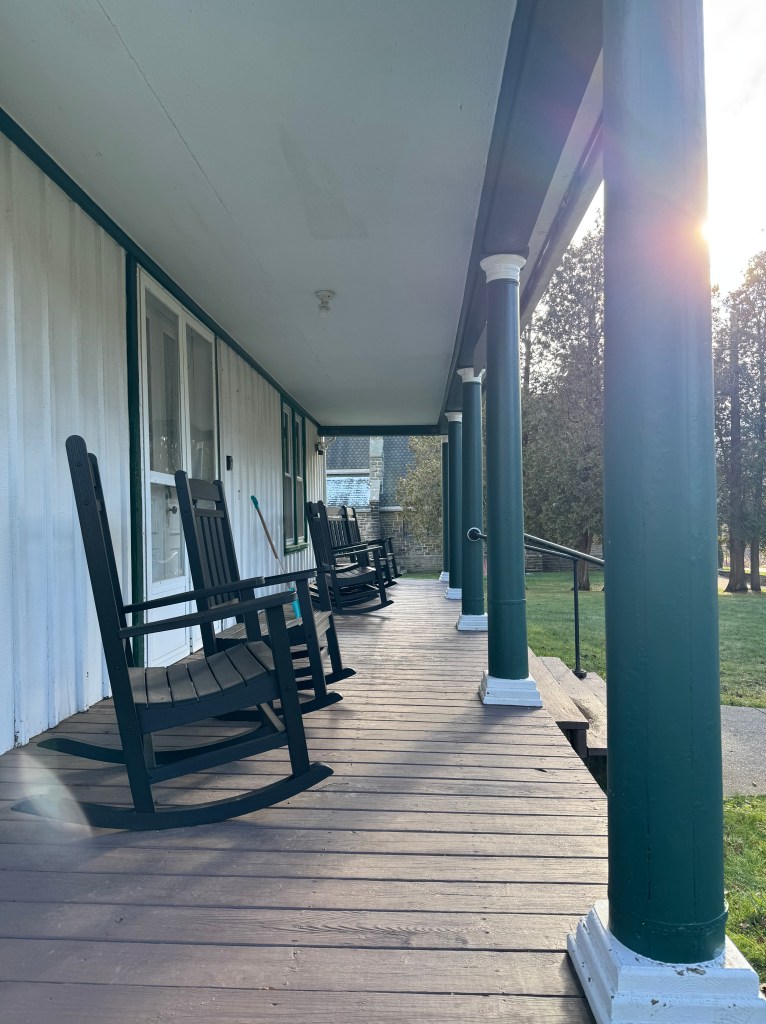
Bishop Nichols and I spent the lion’s share of the day working. When Darryl asked what we were working on, I told him that we were “building a new diocese.” Our meeting went very well. Bishop Nicholas and I have been at this for a while and our working together is exciting. At the end of our time together we made a video sitting on the porch in the beautiful rocking chairs.

We had another visitor today- a woman who represented a local hiking club that is looking for a place to gather and to maybe share a meal and fellowship. It was good to meet another neighbor and to hear about the trails in the area and their maintenance.

Bishop Nichols, Amy (my week long companion and friend) and I shared some sandwiches and then we bid Amy farewell as she headed north to her family homestead in New York. What a good companion she was this week. She came with me to sit in the chapel for Morning and Evening Prayer as we “kept the hours,” helped with kitchen duty, took walks with me and got some of her own work done, as well as. We are good travel partners and friends. I am grateful for her time at BRC with me this week.

After one last spin up the hill and around the field, I reluctantly loaded my car, did a final check in the house (oven off, lights off, trash emptied, back door secured) and headed out.

Three and a half hours later, I was home. Glenn was just returning from the store and prepared to make his famous “you- are- home- from- retreat- stir- fry” and Wobs (my giant cat) gave me the cold shoulder for having been gone for a few nights.

All is as it should be.

Here’s my plea: If you find yourself weary… If you haven’t breathed mountain air for some time….If you need a break from looking at screens… if you want to stare at the dark sky and see it lit up with God’s gorgeous stars… if you need to re-focus, rest, invigorate, do something different…. try a trip to BRC. Getting there is an adventure all its own- the drive into the Northern Tier of the diocese is beautiful- and it is well worth the time.

Email our Property Manager Stuart Scarborough (sscarborough@diocesecpa.org) or check out BRC at http://www.brooklandcenter.org to find out how you can schedule your trip.

Thanks for reading along and letting me share this special place.

Love,

Audrey

Letters from Brookland (3)

Dear friends,

It is a joy to be in a place of such natural beauty and… get one’s work done at the same time!

This morning I woke at dawn and was greeted by a moody sky and a fresh blanket of snow. Waiting for the coffee to finish brewing, I stood at the long windows in the dining room of the retreat house and watched for deer. The clouds moved quickly in the sky, promising that they weren’t going to hang around for long and, indeed, in just a couple hours’ time it was pure cerulean overhead.

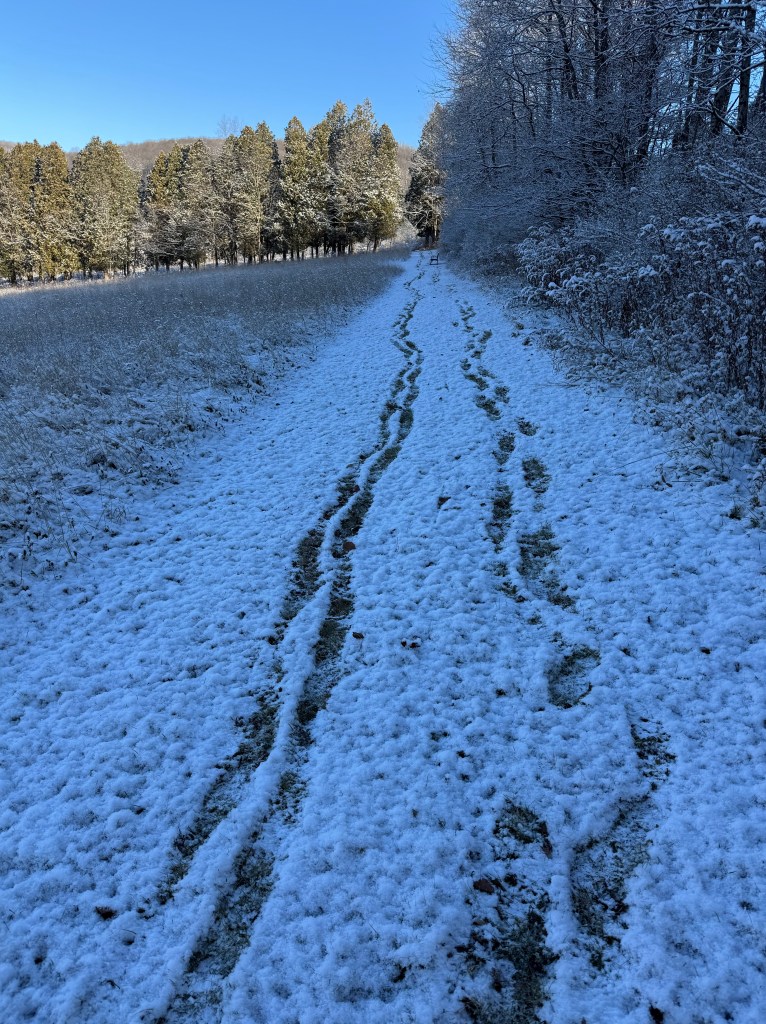
Fueled by a few cups of coffee another early riser (one of our guests) joined me on a quick two miles up and down Horseshoe Road, a largely untraveled byway that passes a few yards from the house. The firs were heavy laden with the night’s snow and we wondered about an interesting track that a we saw along the side of the road… rabbit? deer? (too small for Sasquatch (-: )

Another guest came in time for Morning Prayer and we joined in the chapel to hear the ongoing saga of the Maccabees and the ending of the Book of Revelation. (We saved the gospel reading for Evening Prayer.). It was lovely to hear the refrains of the canticles in this holy space, recited in unison. I thought of the generations of prayers soaked into these walls.

After church it was into the woods and up to the top of the ridge for another short walk. I wear blaze orange up here. You never know if a hunter is nearby, even on this private property. I traveled with one of our guests, The Rev. Janis Yskamp, who knows these woods well. She pointed out the different tracks left by wildlife (and you can see that we left some tracks of our own.)

Today was a “zoom day” and so it was staff meeting at 10:30, and two one-on-one meetings this afternoon. I finished up just in time to greet Bishop Nichols who is here for his first visit to Brookland. I am grateful for the internet and a good signal to allow me to do work while here… as needed.

Tonight we’ll keep the hours and read Evening Prayer in the chapel and then enjoy a quiet dinner. Bishop Nichols and I have lots of work to do and this is a lovely place to do it! Our other guest who is remaining is a good sport. Fortunately, she has ear buds so she doesn’t need to listen to bishops waxing on.

Home tomorrow night- but not until I’ve had at least another walk in the woods!

Love,

Audrey

Letters from Brookland (2)

Tuesday morning.

I have a whole day stretching out in front of me with no online appointments. That is a real gift.

I began the morning with a cup of coffee and a quick tour outside. There were deer tracks in the snow under the apple tree and the sun was doing its best to broadcast a new day from under a thick layer of clouds. I love the view of the retreat house from just up the hill- there were a few lights shining in the house that makes it so inviting and cozy against the snow and dark sky.

A few cups of strong coffee, a perusal of email and checking in with my siblings on our regular dawn “SibChat” text thread got me started.

After Morning Prayer in the chapel, my house mate and I spent some time reading and working and I finally got my walk up to the top of the hill. (Later on I learned from a neighbor that I had trodden on private land… so, tomorrow’s walk will be re-mapped.)

In the afternoon I worked for a short time on my needlework and then the caretaker of the Retreat House, Matt, stopped by. Matt is the Fire Chief in the town, an EMT, Boy Scout leader and a jack of all trades. He is also a great conversationalist and we learned some about the local area from him.

Towards the end of the afternoon, we ventured out on another walk, stopped over to say hello to Darryl, the next door neighbor and fellow Episcopalian, and made it back in time for Evening Prayer in the chapel and the arrival of another guest, who was coming for dinner and the night.

What a lovely way to spend the day: cozy in the house, out in the brisk winter air crunching through snow kissed leaves, visiting with people who know and love this place, and being together in prayer and community. Pretty great.

Tomorrow is a zoom day but another guest is coming for Morning Prayer and a hike before the computer calls me to the couch.

Sweet dreams.

Letters from Brookland

Dear friends,

I’m here at the Brookland Retreat Center in the Northern Tier of our diocese enjoying a “Bishop’s Week in Residence.” I’m here because I wanted to open space up to others in our diocese who might be curious about this place and to invite them to come for a day, or to spend the night (there are 8 guests beds) or to share some conversation, a hike or a meal.

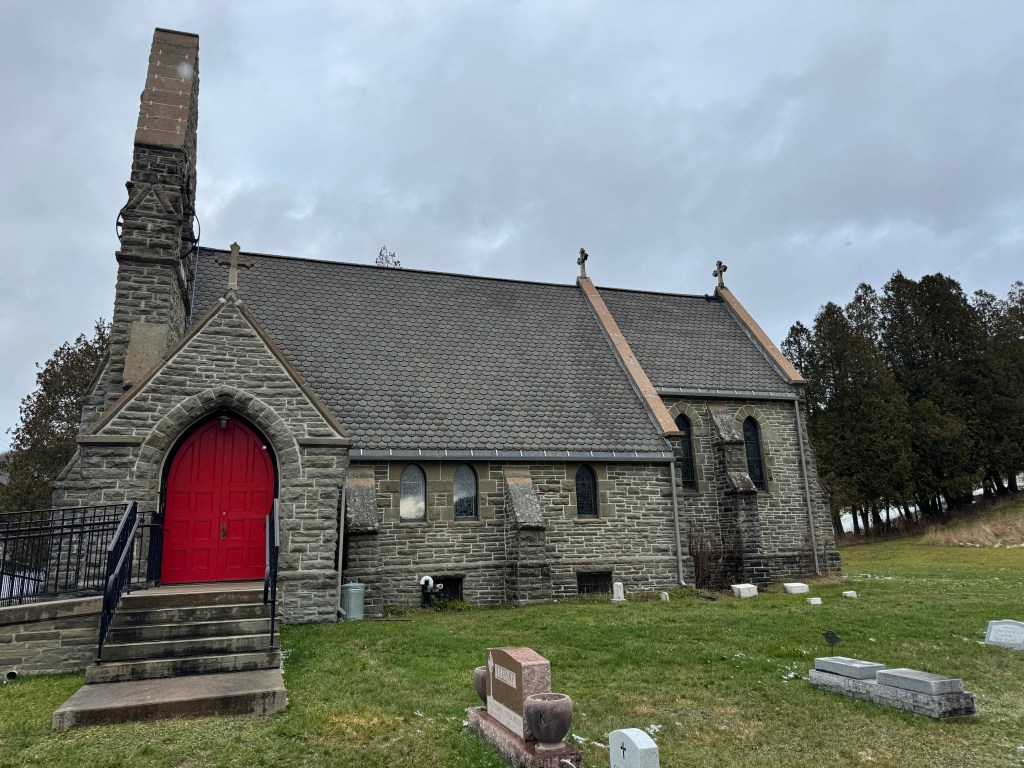
I love it here at “BRC.” The setting is bucolic. The retreat house sits at the edge of a country road with a gracious hill that rises up behind it to the woods. Just across the lawn and through a stand of cedar trees is the stone chapel (1889) which is in the “miniature gothic style” with red and white marble inside and butternut woodwork fashioned with wood from a nearby forest. The stained glass is mostly from Whippel in Exeter, England, and one of the figures in the window depicts the child of the founding father of the parish, Henry Hatch Dent. There is a graveyard that stretches out from the door of the church, and a long sloping field that is used by a local farmer to grow hay. (One time last summer the farmer and his kids were here while Glenn and I were visiting and we learned everything we now know about haying and farm machinery from their 8 year old boy.)

As I made my way up here this morning – along the river through Halifax, Duncannon, and Liverpool, through Selinsgrove and Shamokin Dam, up to Lewisburg, Williamsport and up towards Mansfield- I could feel myself relaxing into a slower pace and a different rhythm. Oh, I brought plenty to “do” (my laptop, some needlework, a half-finished novel and even that small wooden spoon that I’ve been carving on and off since Covid,) but pulling into the driveway, all of that became less urgent. I was happy just to “be” here.

The house is gracious and comfortable. In the past couple of years the furniture has been replaced and there are cozy corners to sit in to read. The kitchen has every single appliance, pot and pan that you could ever want (I brought mostly pre-made food from home for convenience’s sake) and the bedrooms are very comfortable, There are four bathrooms! The porch out front hosts six big rocking chairs that whisper a quiet invitation to rest and ponder.

As I unpacked my things I looked out the window and there were 3 deer in the field behind the church. I went over to the church and read Evening Prayer at 5 PM and then cooked a chicken pot pie that traveled with me from home.

There’s one guest here tonight besides me- that’s all that you need to read the psalms responsively. She’s a friend and good companion, and tomorrow I’m hoping that we will take a hike up the hill. The last time that I was here there was a fox at the edge of the forest at the top of the hill. I’ll keep an eye out tomorrow.

But that’s tomorrow. Tonight there is yet, a book to be read and slumber to come.

Love,

Audrey

C-

One year after an adductoplasty

Author’s note: I’m writing this, really, for myself, to add to the record of my adductoplasty adventure and not to whine. That may surprise you because in this piece, I do some major whining. Feel free to scroll on.

To be fair, I never really asked.

I never queried my doc asking: “So, can I expect a full recovery, full mobility after this surgery?”

I was unpracticed, naive, and this was the first time that I’d “gone under” (except for 10 minutes back in 1982 when the dentist anesthetized me to yank 2 wisdom teeth out of my head) and… I’d never, ever, had any kind of orthopedic surgery.

My doc was very confident. She explained what would happen to me in the surgery (lots of bones to be moved around, tendons cut and reattached, and some titanium plates and screws added to hold everything in place…) and I really liked her. She was smart and listened to my (few) questions and I felt as though I were in good hands. I probably was in good hands. The C- success rate that I have experienced now, one year later, may not have been her fault. But I wanted- and expected- more.

My early days of recovery went right on schedule- if not a little better than expected. I graduated from the scooter to crutches, from the dreaded boot to a very large sneaker, and except for one small incision problem that led to a course of antibiotics, things were pretty good.

The doc didn’t think that I needed physical therapy but everyone that I talked to thought that was crazy. So when I asked for a third time, she wrote me a scrip and I attended dutifully twice a week for three months (and did exercises at home) to address problems with my ankle and hips, my arch, and the still tender toes.

At some point, it appeared that I had a stress fracture. (See previous post) and so I had my first adventure with steroids. (I didn’t think that the steroids did anything for me until I had a mystical experience early on Easter morning and later that day I found myself weeping while distributing communion…)

It was about this time that I just went silent about my old foot. Six months into all of this, no one wanted to hear about my foot anymore. I don’t blame them. I didn’t want to hear about it either. But in my final appointment with the doc which was at the end of May (7 full months after surgery) things still weren’t great. My big toe was “frozen,” my middle toe didn’t move at all on command and drifted over to cross over my fourth toe, and, my index toe was becoming a “hammer toe.” Add significant numbness on the top of the foot and in all but one toe and …. C-. My balance, too, was (and is) horrendous because only my pinky toe actually touched (touches) the ground in bare feet. I became a liability without shoes and in the shower, holding on to every grip bar and bannister available to me.

I guess that’s just the way it goes. When I seemed discouraged at the doctor’s office she reminded me that this was “major surgery.” “We rebuilt your foot,” she told me.

Another friend who had similarly invasive surgery on his foot told me that it “takes a year.”

OK. It’s a year. But it’s still, a C-. Still, a toe refuses to move, and still that toe drifts around, still my big toe is stuck, and my balance is horrendous and my foot is super numb.

I went on a solo backpacking trip in August (see two posts about that) and was determined to “be okay.” I was okay- or as okay as I ever am, climbing mountains. I was tired and winded but my feet held up until the last day when I went down a steep descent and jammed my toes into the front of my boots but.. that’s normal.

I’m going to keep hiking. I’m going to keep walking. I’m going to live my “normal” life even though my right foot would rather stay home.

A need a surgery on my left foot. Maybe not as extensive as the other foot, but I’m scared. I guess I need a new doc, too, though that makes me very sad. And, I may just carry on, and not do it at all. Time will tell.

This entry is for posterity’s sake, and I’ll go back to being quiet about my foot. Both of them.

Cheers.

Dirigo

A trio of Maine Stories

Preface

Almost every summer of my 66 years, I have spent some time in Maine. My ancestor, James Millay, came from County Kilkenny, Ireland, to Maine in the mid-18th century and planted our family’s heritage Down East. My great-grandparents, grandparents, aunts and uncles, parents, cousins and siblings have all spent time in Maine, and today, Maine is home to my sister, step-brother, step-nephew, some cousins, son, and grandson. I call Maine my “soul home.” When I am there, I feel complete. Settled. It is, you could say, “in my bones.”

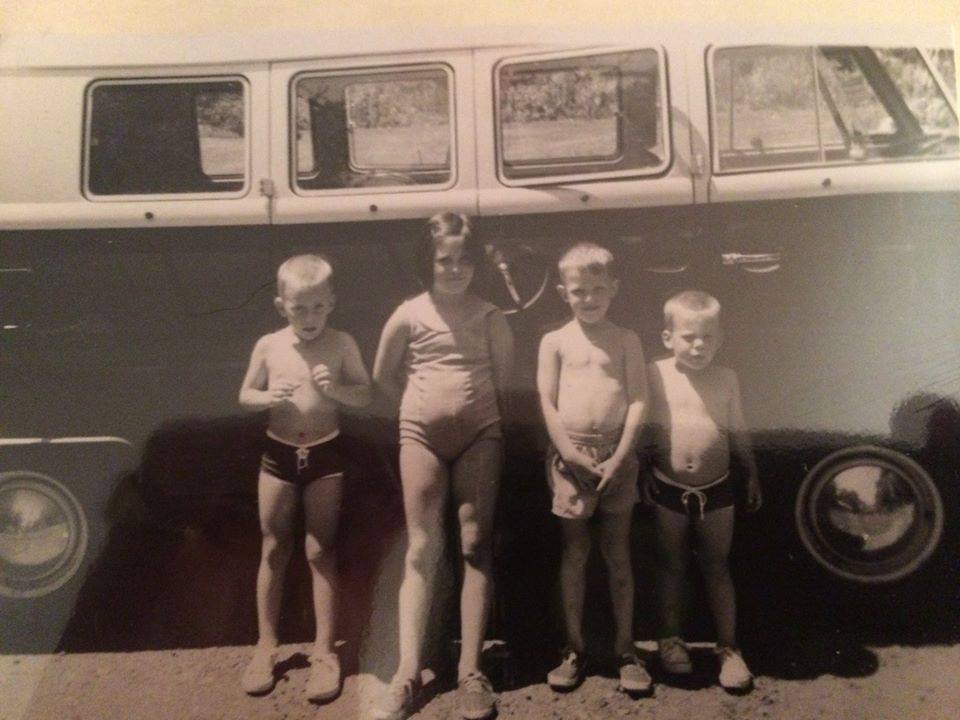
Two of my cousins and one of my brothers and me, circa 1964 in Harpswell, Maine.
Rick, me, Courtney and David.

“Dirigo” is the Maine motto. In Latin, it means, “I lead. I direct.” This is a reference to the leadership of the pioneers who settled Maine, signifying their independence and the significance of Maine as the easternmost state. In my job, I lead. I direct- a diocese. It is on these annual treks that I get to step away from all that and let the geography, my heritage, tradition and my heart – lead.

This summer’s trip was a quick one. Glenn and I arrived home on a Sunday night at 10 PM from a California trip to see kids and grandkids, and by Monday morning at 9 AM, I was in the car with a bag full of clean clothes, headed Down East. My sister awaited me, graciously making time in her schedule to host me.

  1. Steamers

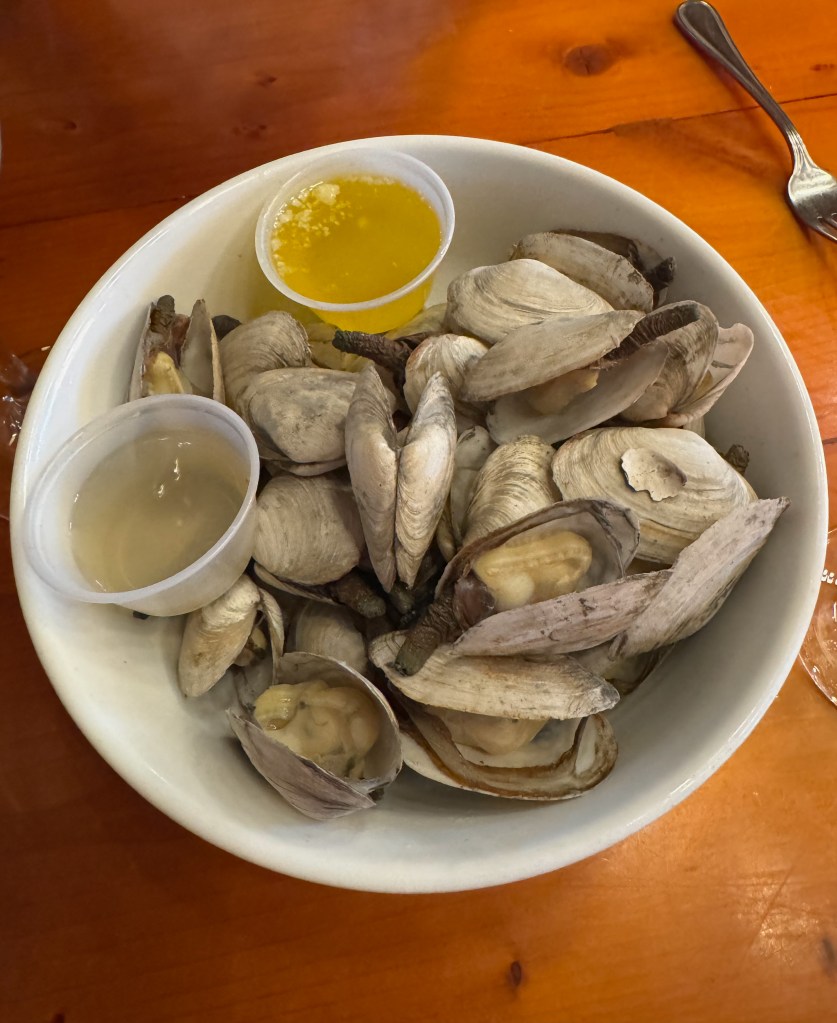
A big part of any trip, for me, is exploring the local cuisine and eating what the land (or sea) has to offer. When most people go to Maine, lobster is at the top of their “must eat” list. For me, it is steamed clams. My mother used to tell a story of how, on the summer just before my first birthday, I took my first wobbly steps (in South Harpswell) and also ate my first steamed clam. I guess, back then, parents didn’t worry about things like shellfish allergies. I must have had enough teeth to manage the rubbery black neck, or siphon, of the clam and the attached “belly,” full of briny, soft, clammy-goodness. (I am at a loss for words of how to describe, exactly, the taste of a clam.). As I grew, summer by summer, I learned the ritual of extracting the clam from the shell, slipping the neck from its papery covering, swirling the clam around in the cup of broth provided at the table, dipping it again, this time in melted butter, and then getting the whole clam into your mouth without dripping butter all over the front of your shirt. (Lobster eaters are often given big, infantilizing paper bibs to catch their drips. Clam eaters are better than that.). At the end of the steamer-session, you finish by carefully drinking the leftover broth, stopping just short of taking in the gritty, sludgy sand at the bottom of the cup. The broth tastes like the sea.

My sister and I went to Cook’s Lobster and Ale House on Bailey Island to find our steamers. It is one of two or three places that we have been going to for decades. One of the other places, Estes Beach, closed, sadly, in the last year or so. Estes was where I tasted my first clam, but Cooks did not disappoint on our recent trip. My first taste of clams this year was almost shocking in its perfection: salty sweetness, briny broth, silky butter, chewy and soft. We made our way through a shared bucket of clams, and, later, had a haddock, scallop and shrimp casserole. Heaven.

In a short trip of a few days, I also managed to enjoy fried whole belly clams and a lobster roll. The lobster roll (wars have been fought over this I am sure) was done the “right way-” on a toasted hot dog bun filled with lobster meat and dressed with a kiss of melted butter. No Mayo. I repeat. No Mayo. We ate outside at picnic tables under a striped umbrella and enjoyed this second seafood feast.

Maine has other things on the menu of course, most notably tiny blueberries baked into sweet pies just screaming for a scoop of vanilla ice cream, and Moxie soda (not my preference, but a family favorite and native to Maine), the “Whoopie Pie” (the origin of which is also claimed by our friends in Pennsylvania), and, in recent years, the “potato donut.” Maine grows a lot of potatoes (they used to give kids a leave from school to assist with the harvesting of potatoes, back in the day) and at least one clever entrepreneur has chosen to create a line of gourmet donuts made with potato flour. I made a trip to “Holy Donuts” and couldn’t decide between the chocolate sea salt donut or the toasted coconut donut so… I got both. They were dense, delicious and novel. Other flavors that we brought home included blueberry lemon, maple, and old fashioned cinnamon.

I did not go home hungry.

2. A Perfect Maine Day

Lookout Point, Casco Bay.

My mother used to exclaim on bright, sunny, breezy August days, “It’s a perfect Maine day.”

I got to enjoy four “perfect Maine days” on this visit.

For me, part of a trip to Maine includes a visit to our “old haunts.” Among them are Monhegan Island (not possible this time), Land’s End on Bailey Island, Estes Beach in South Harpswell, Cundy’s Harbor (have to have a Moxie there, it’s tradition… it is also where my grandson Kieran lives in the old sea captain’s house), Great Island (where my mom lived for a couple of decades), Bowdoinham (site of the cemetery where James and Abigail Millay and other relatives are buried and site of the “family farm” on Merrymeeting Bay), the Dolphin Marina, and Lookout Point- a spit of land in Casco Bay with an old seaside inn where my mom and her cousins stayed in summers past. At the end of the road at Lookout Point there is a swimming beach on one side, and, on the other, an iconic tiny Maine island with a few pines trees and a rocky shore.

My sister and I went on a “junket” (we know that a “junket” is really a pleasure trip for government officials paid for with public funds… and also a creamy gelatin based dessert, but we’ve been using this word incorrectly to describe a “Sunday drive” for years and it’s too late to change now,) and on this occasion, we got to several of our favorite places, including Lookout Point.

The sea was mineral blue, the wind just high enough to make the water sparkle and shine. The pine trees on the shore and the tiny island offered a deep green accent and the sky was cerulean (in Latin, this word means “heaven”). There were just enough puffy clouds to balance the whole composition. If you’ve been to the seaside, you know the smell that greeted us when we lowered the windows: pine, salt water, seaweed. The lapping of waves on the shore and the crying gulls completed the scene. A perfect Maine Day.

3. Are You There?

When I go to Maine, I stay in my mother’s apartment. It is a “mother-in-law” apartment built at my sister’s house years ago when my widowed mother decided to leave the big island deck house at Little Crow Point and move “into town.” It was a good move for someone in their eighth decade and, for me, it removed my worry about what was going on when my mother didn’t answer my phone calls on the first few rings. I was glad that she was “in town” (Brunswick) and that she had my sister and her family just downstairs.

My mother died fourteen years ago at the age of 85. It seems like yesterday.

When I stay in her apartment I find myself wandering over to her bookcase and sitting on the rug in front of it, studying the titles of her small library, conjuring her memory. My mother studied English Literature earning an undergraduate degree at Wheaton College (MA) and a Master’s at Columbia University. She taught English at the Kent School. Back then the curriculum included works of Keats, Shelly, Chaucer, Shakespeare, Faulkner, Willa Cather and the Book of Job from the Old Testament. I’m sure that there was more, but these are the authors and works that I remember the most from years and.years of gazing at the same bookcase when, filled with the same titles, it was in my bedroom, inches from my bed. I would wake and study the books, thinking of the stories inside them. (I hand’t read many of them back then and I am sure that the stories that I imagined were far from what actually filled the pages.)

When I am at my mother’s apartment, I think about her long and brave life (widowed, first, in her thirties with three small children and then again, in her sixties, living in a big seaside house), and I think about all the things that I didn’t ask her, or that we didn’t discuss. It’s all hindsight. I didn’t have the questions fully formed in my earlier years.

I look at the artwork on her walls (some of it from her own hand), and the small harpsichord tucked into the corner (no one has played it for years), and sometimes I open the closet door to look at her cd collection and the few “iconic” clothing items like her white knit hat, or straw hat with the floppy brim, or her red woolen toggle coat that my sister and I haven’t been able to part with. This time there was an exercise bike placed in front of the closet door that kept me from digging too deeply.

I sit at the counter that she called “Command Central” and work on my laptop, remembering her, here, with her own laptop and her habit of doing the NYT crossword puzzle in pen (with occasional splotches of Wite-Out). I sleep in her bed and look around the breezy bedroom and at its appointments: a small pine dresser that’s been in the family for generations, a pine framed mirror on her dresser that was a wedding gift to my parents at their wedding, a cross stitch that I did in the early 80s quoting the lyrics of a favorite hymn, and a colonial style candle holder that my brother, Courtney, made as a Christmas gift one year.

I catch glimpses in my memory of her favorite quips: “Pull up your socks.” “Good night!” (said with exasperation), “Smile! It’s your birthday!” (said on any day that was not your birthday but when you were grumpy), and I strain to hear her voice.

Mourning, it seems, can go on for decades, and it is tender, not all bad.

Postlude

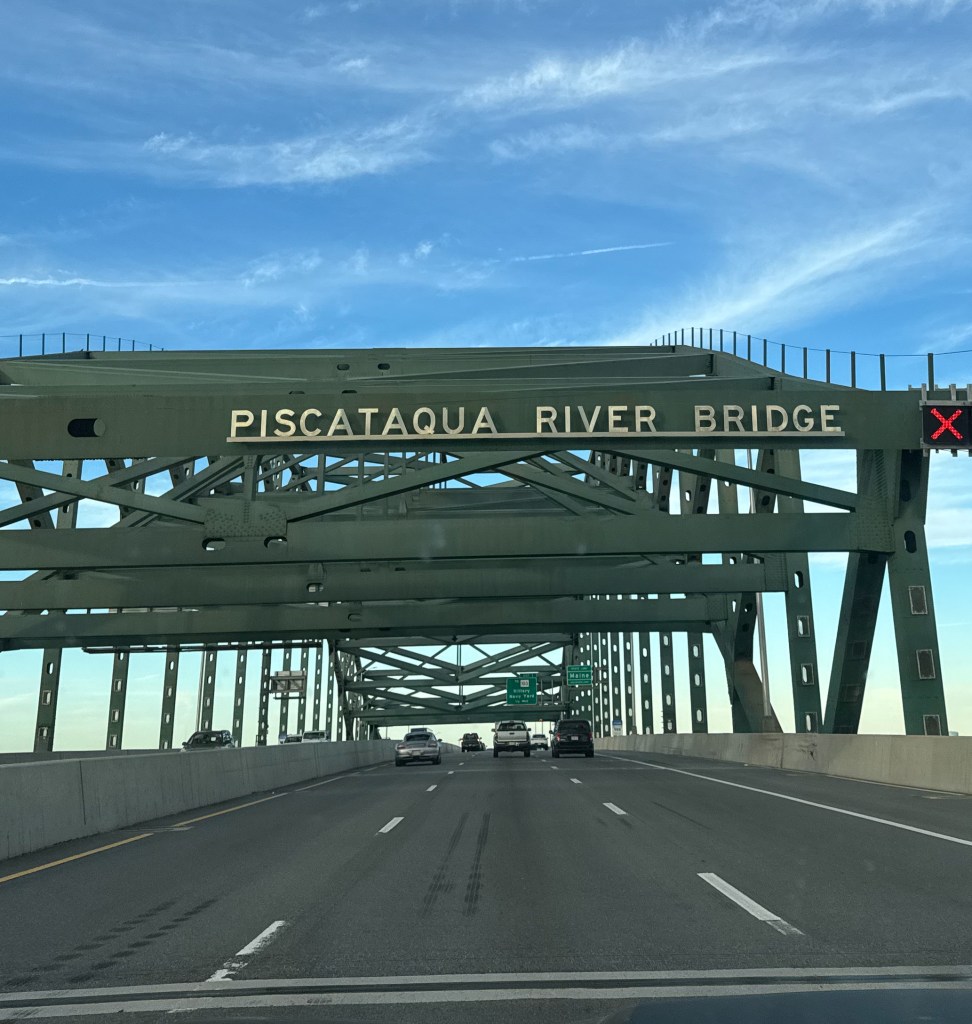
I left the same way that I came, over the Piscataqua River Bridge that connects Maine to New Hampshire, less than a week after my arrival. This bridge, when heading Down East is a symbol of release and anticipation. Heading back to home, it is a taking back of responsibility, emails, and the work to which I have been called.

I’m ready to be home and have ten hours of wheel time to think about it. It is a gentle ride (I left at 5 AM and missed most of the traffic) and when I get home, I am happy to be there.

Until next August, Maine.

The B side

The post that I wrote the other day, (Rocks, and more Rocks) is absolutely true.

But there’s a lot to a hike- even a 4 day hike- that goes on in the head. My self-talk is informed by my gender (woman hiking alone- a cultural curiosity- one guy actually asked me if it was “ok with my husband that I was out here alone”), my age (seventh decade of life), my physicality (not in top condition), life experience (the brutal attack and death of a college friend 45 years ago that still informs my world view) and my own general insecurities and anxieties.

There are a lot of decisions that one makes on a hike. As well planned in advance as it may be, the number of choices that one makes from moment to moment- calculating foot placement- to hourly choices of when to rest, to bigger choices about where to set up one’s tent… it’s a lot. Read on to hear the self-talk on my otherwise beautiful AT hike last weekend. Or, just stick with yesterday’s post. It was nice.

Day One. Drop off.

I am super nervous about these things: Rattlesnakes and copperheads. Bears. Falling and breaking a bone. Having to climb steep hills and not being able to manage my heart rate.

The initial climb out of Swatara Gap has been making me anxious for weeks now as I have planned this trip. I’m glad that it is happening first thing, because after that, it’s all a ridge walk.

As we say goodbye, Glenn spies a garter snake in the parking lot. I consider this a bad omen. I tell him that I am nervous. He tells me that “he’s seen me hike before” and that I’ll be fine. I appreciate that.

Day One. At the Top of the Hill.

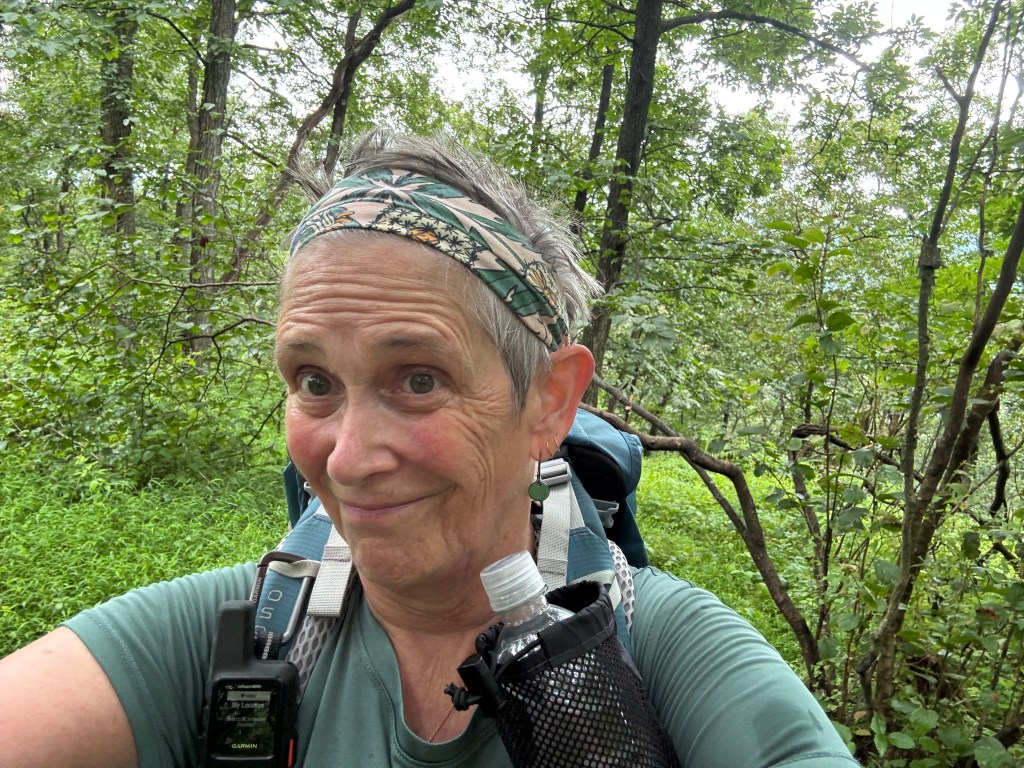
I made it. I am relieved. I take a selfie because this seems like a significant moment. In reality, the climb was only about 1100 ft. which, in AT climbing terms is baby talk, but I’m happy, nonetheless. Now I can worry about other things like snakes and bears.

Day One. 1 PM.

I’ve arrived at the shelter where I planned on spending the night but… it’s too early to stay here. Because of my anxiety, I insisted on leaving early and so, by midday I’ve gotten to my destination, a shelter down a steep hill that is boxed in with forest and no view. There are no tenting spots right at the shelter. The tenting spots are back up the hill on the other side of the trail on the path down to the spring. If I stay here and camp, I’ll likely be alone. That doesn’t sound fun.

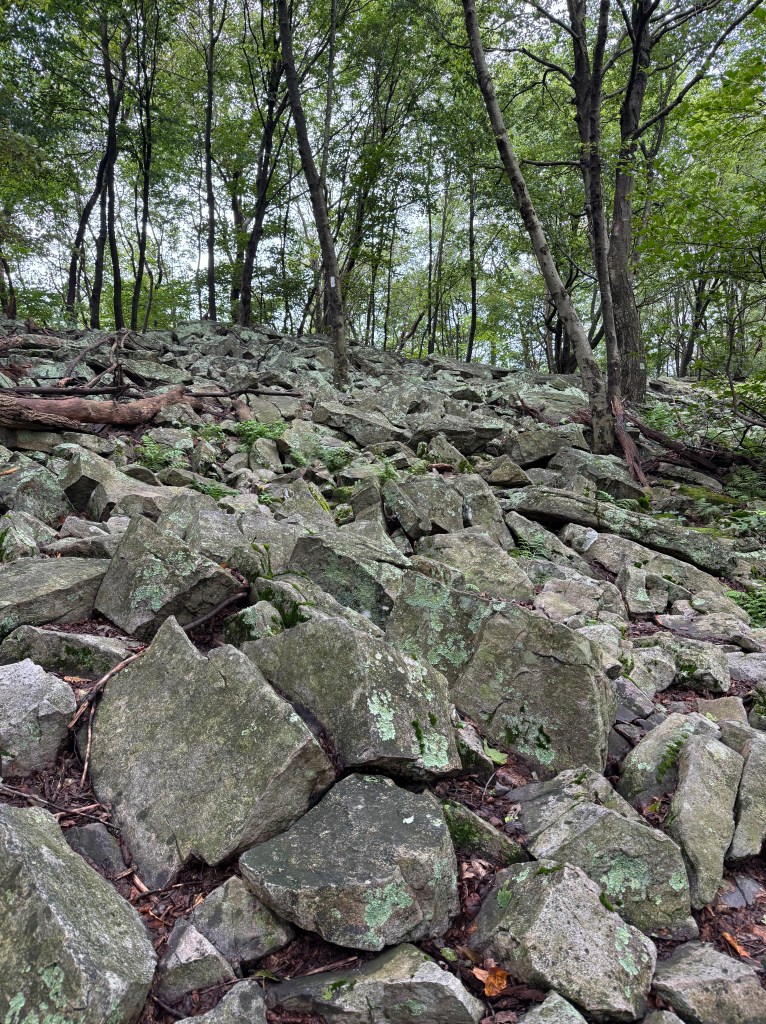
I make the decision to press on another 4 miles to the next camping opportunity, a shelter that is more of a shed with a caretaker living next door. There is a spigot on the caretaker’s house for water and a port-a-potty and an outdoor electrical outlet on the front porch to charge my battery and phone. I press on to that site, rocks be damned. Rock fields are abundant in this section. A giant boulder field with one tree in the middle bears the white blaze, directing the route. I am a little discouraged and tired.

Arriving at the campsite I scope it out. Inside the shed are two young men smoking pot. I greet them and they do not respond. My “spidey senses” tell me that they are not problematic, but I’m going to tent outside and just hang my food bag inside from one of the hooks in the ceiling that has a dropped line and an upside down tin can that will keep the mice from getting it.

I enjoy a nice night in the tent, getting up at least 5 times to pee in the woods. No bears.

Day Two. Morning.

I wake up and get to the electric outlet to plug in my phone to charge even though I still have battery life left (lots of it) and yet, this is the last electric plug that I expect to see in 3 days. My phone is my primary navigating device that tells me how much further I have to travel each day, the elevation of the hike, the availability of water. While I carry a paper trail map, I don’t want to lose the capacity to check the app on my phone.

When I approach the house to retrieve the phone, there is a dog on the other side of the door barking and snarling at me. Did I mention that I am also afraid of dogs? I grab my phone and go.

Phone charged. Battery at 100%. I head out.

Ferns and forest are lovely. Rock sections challenge me. I stop frequently to look around, listen, catch my breath. I wonder about my aging body as hikers 40 years younger than I am politely overtake me and seem to glide above the pointy rocks, traveling at three times my speed. I try not to compare myself to them but I do, anyway. How many times today have I remarked in my head that I am woefully out of shape?

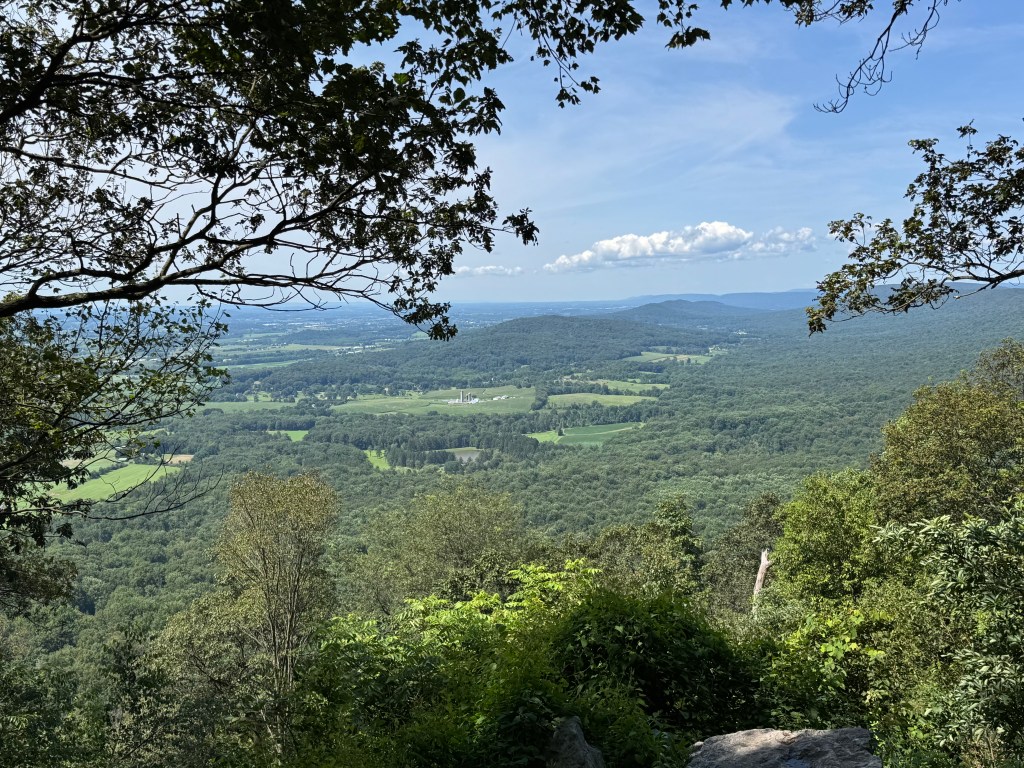
As I make my way, there are two overlooks noted on my trail app. Both of them offer views of the PA valleys but I keep my distance from the edge of the rocks, knowing that copperheads have been nesting there recently. (I read it in the app.)

Day Two. Mid day and afternoon.

I make a steep descent into a gap and then up again, stopping every 50 yards to catch my breath and get my heart rate down. My father died in his 30s from a heart attack so I am always anxious about meeting a similar fate although there are no indications that I’m in bad cardiac shape.

The steep descent led through the floor of a micro-canyon and to a place called “Devil’s Graveyard, ” a boulder field of some notoriety in Berk’s County. I know that this is the name because another hiker that I passed wearing converse sneakers and with no pack and no apparent water, was standing off of the side of the trail acting a little weird. (maybe I came up on him as he was peeing). He asked where I was headed (not a question that solo female hikers ever answer truthfully) and he said that if I were going to the Devil’s Graveyard, he would come along. I kept moving and kept my head down. When I got to Devil’s Graveyard, I made a sharp turn and continued to the campsite for the night.

The campsite was lovely. There was a stream running through it, a blocked off part for swimming, and even a few tent pads. I soaked my feet in the cold water and, wow, did it feel good. Just across the way, three teen boys had their camp set up and were busy playing with firecrackers. M-80s. The loud ones. I prayed for their supply to run out. It did. Then they packed up and left. Other campers arrived- Dads and kids, a scouting outing of some kind, an older guy with two teens, and we greeted each other as I set up my tent. I got my whole camp set up: tent erected, sleeping bag and sleeping pad out, cookstove and food ready for supper and… I looked up… to discover that I was camped under a “widow maker.” (dead tree.). I investigated the other clearly marked camp site. It too, had a dead tree hovering above it. I broke down camp and moved to a third spot, still slightly within reach of a falling branch if things got windy. This led me to googling wind speed and the forecast. I figured that I was ok. I was.

Day Three. Morning

This day began with another steep climb out of the holler. I fretted about bears as I made the very slow ascent, singing and praying canticles out loud to make sure that the bears knew that I was on my way. Surprising a bear doesn’t seem like a good idea. I was super anxious until I rounded a corner and… there was a guy. He got to “enjoy” some of my singing, I guess, as I made my approach. I told him that I was “singing to the bears” and he laughed, telling me that he doubted that there were any around. How did he know? Was he the bear police? Having crossed his path, however, I was now confident that he might have chased any bears off, unwittingly, and it was now ok to proceed without singing every hit from “Oklahoma” that I knew. (I am sure that the rocks and ferns appreciated it.)

Afternoon.

I carried on through some lovely sections of trail that included more fern fields and, then, a burn field- a place where the trees had burned and only the undergrowth was yet growing back. This was in the heat of day – and the sun was shining- and each scary rock was now obscured by grass and ferns. (When I remarked on this later to a companion at the shelter, she said, “Oh, wasn’t it nice to be out in the open!”) Yes, it was. And, the hidden rocks persisted for at least 2 miles.

“Where did you hide the shelter?!?”

The last shelter that I stayed at was a long way off trail- almost a half mile. About halfway in there was a stream that was running high and I noted that this was the water source that I would revisit later, when not weighed down with a pack.

The shelter was, as the guide promised, “nothing special,” but it was in a clearing that made my heart sing. There’s something about those shelters that are backed up in to the shoulder of a mountain that make me feel so empty and lonely. This one had a fire ring, a composting privy, a grove of trees, lots of space for tenting and a good “feel” to it. Sick of setting up my tent every night, I decided to stay in the shelter. If I didn’t have to break down my tent, I could get an even earlier start in the morning since I had a long day ahead and a scary steep 15% grade descent in gravely rocks into the town of Port Clinton.

I set up my sleeping quilt and sleeping mat and hung my backpack out of the way of mice.

As I rested, two folks came along- and then another- and we had a quiet and nice time talking and eating dinner and getting ready for sleep (at 7:30). As we tucked into our sleeping spots, I asked the young woman beside me about her experience of mice in the shelters. “Oh, ” she remarked, ” They don’t bother me. I snuggle into my bag, zip it up and let them run up and down and across me.” I replied, “But I have a sleeping quilt, not a full zip bag!” She said, “well, tuck it in as best you can, under your legs.” It was hot that night. I didn’t want to be “tucked into” a down sleeping quilt, but I did, for fear of the mice. Turns out, there were no mice that night. All was quiet except for our snoring.

Last day: Hiking out.

It was a long day of more ferns and rocks but what is most memorable is the crazy descent that was about 1.5 miles into Port Clinton. It would make your mama weep. It would have made me weep except that I had to keep focused so as to stay upright. 3 bugs (gnats) flew- at different moments- into my left eye. I finally donned my baseball cap to keep them away. With one good eye I traversed sideways down the gravely path wondering, all the while, why it is that I prefer down hills to up hills.

When I was nearly at the bottom, two teenagers passed me by. I was resting a corner of a switchback and remarked, “Oh, I’m just letting my toes stop screaming.” (toes on steep descents push against the front of one’s shoe) and the young man said, “Ma’am, are you all right?” OMG. “Yes, I’m fine. Thank you.” I felt like some old hag that Hansel and Gretel had discovered in the deep of the woods. I got to the bottom, ate my lunch in the shade of the rail trail and headed through town to the meeting spot where Glenn would pick me up.

Moral of the Story

It’s not as bad as you think it’s going to be?

It is as bad as you think it’s going to be but you need to stay in the positive?

Research, previewing Youtube videos, asking other hikers what’s coming up: is that smart… or is it better just to discover what lies ahead when you get there?

I dunno.

When I finish a hike like this there is a great feeling of satisfaction and accomplishment. There are rough moments and… there are beautiful moments. The challenging self-talk and worry and anxiety (“Is this other person an axe murderer?” “Is this tree going to fall on my tent?” “Is a bear going to be around the next corner?” “Is a mouse going to climb into bed with me?” “Is my phone going to die?”). It’s a lot. But it is not so much that I do not persist. I am already planning my next hike. I’m sure that the bears and rattlesnakes can’t wait.