lessons in infirmity

Do you want to read a self-indulgent essay on how being consigned to three – four months in an orthopedic boot has changed my life? (PS, I’m only at the beginning of Week Three.)

Do you really care about: 

  • the new difficulty of my putting a casserole dish in the oven without risking life and limb?
  • my growing affection for a good “grab bar” in a handicapped bathroom?
  • the fact that I have poured coffee on my new living room rug twice now, because pouring from the thermos that fits in my scooter basket into the coffee cup that I prefer to drink from in my “recovery bed” is a drippy proposition and the coffee ends up running down my arm and onto the new beige Berber carpet?

(I care, but you shouldn’t.)

Are you sick of my 

  • whinging about a temporary affliction that I brought on by myself with elective surgery?
  • hearing about how many days (or weeks, now) it’s been since I’ve taken a shower?
  • looking at my forlorn, sad face pressed up against the window to see the Supermoon or hearing about the way that I wheel over to the back door and crack it open to inhale the fecund aroma of wet leaves in the autumn that I am “missing?”

(I’m sick of it, and you should be, too.)

Instead, here are some second level things to think about:

  1. My doctoral degree in the “Theology of Disability” has taken on a new meaning for me in these past few weeks.  Years ago, I pursued an advanced degree in Congregational Development but ended up taking a side road into the world of Differing Abilities when my ministerial work found me working with young people on the Autism Spectrum. I cared about how children and their families were embraced (or not) by the church which, for the most part, did not accommodate different learning styles and neurological divergence.  With a partner in Christian Education, we created a program called Rhythms of Grace which used a format of “reverse inclusion”:  the worship service that we designed was oriented to support many different learning styles and allowed for therapeutic intervention in the context of a Christian community as well as formation and sacramental nurture.  We told bible stories in interactive ways. We used felt boards and sand tables and the dramatic arts. We used modelling clay and large tubs of dried beans and small trampolines to encourage kinesthetic awareness.  We had a tiny pup tent set up in the corner of the room each time we gathered. The pup tent was filled with dolls and blankets and soft toys for times when our parishioners needed to just get a way for a moment, to self soothe or to watch from a safe distance.  We sat on the floor around an upturned apple crate and celebrated the holiest of communion services with gentle words, familiar songs, and apple juice and rice crackers. God was made manifest to us.  Parents felt included and supported. Children were welcomed.  A community was born.

These were profound years in my own spiritual development, and I loved the ministry of Rhythms of Grace.

Today, though my malady is purely physical, I am able to understand just a tiny bit better about the anxiety of wondering about welcome and accessibility and if I will be able to “do the thing” that I want to do in the space that has been established before my arrival.  Temporary physical disability is much different than negotiating culture with neurodivergence, but I have had just a taste of my own anxiety about fitting in which, I can imagine, for parents of neurodivergent children considering attending a traditional church service, they must feel in spades.

2. Mary Oliver has a poem in which she writes about the “soft animal of your body.” The poem, “Wild Geese” is about turning away from self-centered focus on one’s one problems and suffering and, instead, to marvel in the grandeur of creation and to be lifted up by the liberation of “loving what we love” and not agonizing over what is not or what we “should” be.( Note to self: the poem has a good message for me right now) but that phrase: “the soft animal of your body” has resonance for me in these days of my minor infirmity.

My body and I: it is a complicated thing, our relationship.  I revel in being hale and hearty.  I have always agonized over the size and shape of my body. This process of surgery has made me feel vulnerable, has exposed elements of my aging that, while “normal” have been alarming to confront (loss of muscle mass, the need to pay attention to my blood pressure for the first time in my life, the natural decline of balance and dexterity which comes with aging but can be treacherous when navigating on crutches…). All of this has been so much.  I don’t want to be infirm.

I am used to hiking with a 30-pound backpack for hours.  I can live in the woods for days. I don’t take pills. I eat well.  I walk miles and miles and breathe in wholeness in nature.  This “soft animal of my body” is now old and tired and weak.  I hate that.

I did some chair yoga last night.  I’m not ready to submit. 

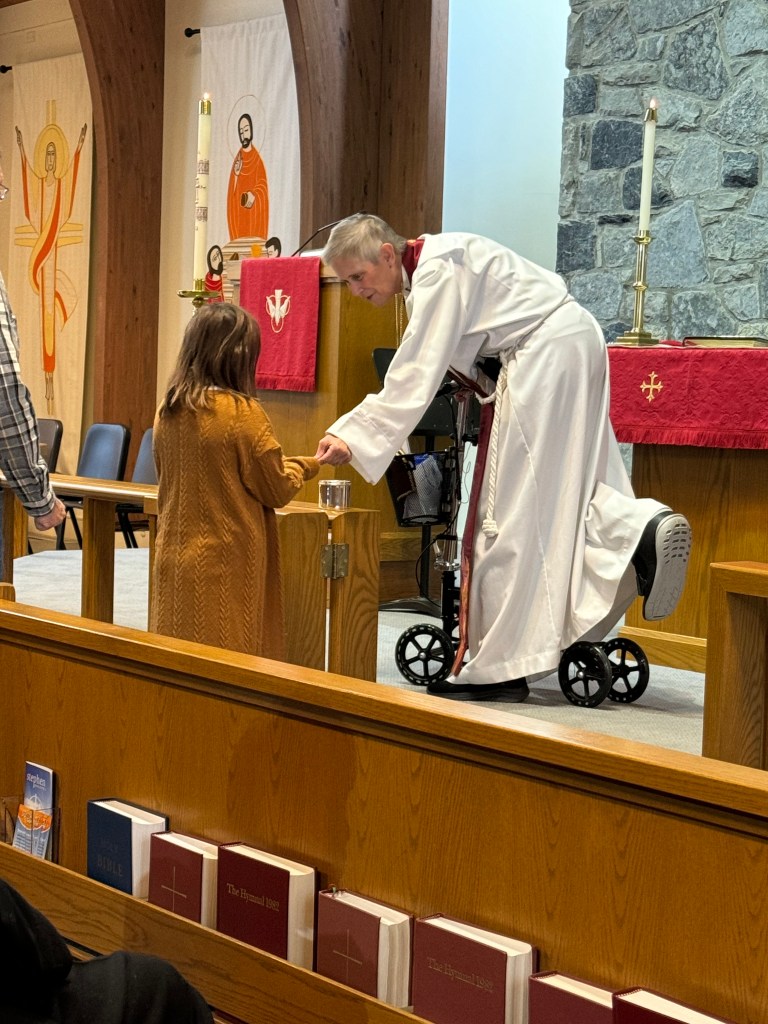
3. I am struggling with performing my “role” (doing my job) from a compromised physical state.  I serve at the top of my “organization” (church diocese) as the “CEO” (bishop) and carry with me a great deal of authority (much of it given to me by my parishioners, some of it given to me through the canons) when I enter a room. I preach the Word of God from a pulpit, choosing my words carefully for impact, using gestures to support my words, and working to share something that we call “Good News” that is for our very salvation.  It is hard to do that sitting down.

We bishops wear robes, and pointy hats, and carry symbolic sticks (croziers) that show our call as pastors to care for our people.   Those sticks, when used by real shepherds, pull sheep out of tricky places, prod them along to where they need to be, and fend off the enemy.  I feel disempowered to care for others when I myself am in such need. I can’t even carry the stick while maneuvering my scooter (not to mention the ungainly way that I have to fold up my long robe so it doesn’t become, literally, wrapped around the axle.) I am questioning hard- and not for the first time- the efficacy of these (silly) symbols.

As a woman, I experience already a certain cultural pressure to be at the top of my game all the time- to be whole and just and level-headed and non-anxious in my leadership of my staff and our diocesan system.  It’s hard to feel centered, emotionally and on my leadership game when I am physically weakened. That soft animal of my body.

4. A praying person- by nature and in discipline- I am surprised by the shift in my spiritual wellbeing.  I am abandoned to such base needs- moving from one place to another, planning minutes in advance to hobble to the bathroom, strategizing something as basic as making a cup of tea and carrying it to my chair- that my formal devotions are on hold.  I haven’t read Morning Prayer. I haven’t wanted to read Morning Prayer. It is usually my foundation for the day.  I have lost discipline in spiritual things while managing things earthly.  I will discipline myself to “begin again” (Benedict) in Advent.

And so, for now, I pray by looking at the stars out of the window as I wake, it seems, on the hour.  I pray listening to the owls carrying on their nighttime woodland conversation. I pray in thanksgiving for the distraction of books and podcasts, of the Great British Baking Show, and of the endless supply of email that makes me feel, even though I am sitting still, that I am actually doing something.

Second level lessons, I suppose.

How many levels are there, I wonder?

sidelined

One week ago today, I had a procedure called an “adductoplasty.” In the world of podiatry, this procedure corrects a genetic deformity of the foot by re-positioning the bones of the first three metatarsals by “releasing” ligaments and inserting internal giant titanium staples around the bones in the mid-foot area to keep them from wandering. In addition, my adductoplasty also included a “correction” to a decades-old bunion which required its own wrangling and reduction. If these formal terms are keeping you from imagining any gore, then, good. But it was (still is) gory. Three big incisions, four smaller incisions where the ligaments were “released” (“be free!”) and talk of “shaving bone” (gag) which resulted in plenty of swelling and bruising. I got my first look at it all yesterday at a follow up appointment with the doc and, though she was pleased, it was all a little too much for me.

This procedure is known for the pain that it wields, and a lengthy recovery. So far, the pain has been manageable (only a few awful moments of “nerve reawakening” that feel more like hot pokers delivering electric shots to tender spots in one’s foot) and the recovery- well… I am just beginning Week Two of a projected 13-14 week odyssey.

My sister was here to nurse me through the first week and to help Glenn as we figured it all out, together. My recovery bed was set up in the living room (a view of the stars and autumn leaves out the window, a fireplace 5 feet from the foot of the bed, easy access to kitchen, powder room, etc…) It could not have been better. My sister is a great cook. She accommodated my pescatarian/vegetarian/vegan tastes and made us a parade of beautiful meals: roasted cauliflower with tahini harissa sauce in pita pockets, linguine with clam sauce, frittata with fresh herbs and parmesan reggiano, salmon bowls with brown rice, edamame, cuke, tomatoes and Japaneses barbecue sauce, and macaroni casserole for comfort food. She also left us with a freezer full of dinners for the weeks ahead.

So- this post is less about the surgery… and more about my surprise at the effects of being sidelined for a few weeks. If this sounds like a whine, or a rant… then it may very well be. Yes, I know that there are huge problems in the world. That our country is in a time of deep division having just reelected the former president to office. That people whom I love- trans people, gay people, young women, people of color- are at real risk. Even I, as a female of a certain age in leadership, feel vulnerable in a few different ways. I know. And, aside from that, and acknowledging my great privilege (white woman, financially secure, great health insurance, supportive family…) I am still feeling more and more like Eyeore these days. So scroll on, if it’s too much. I get it.

Mostly, I am so sad about not being able to be outside. Every morning I rise before dawn, say my prayers and head out into the inky darkness for a 3-5 mile walk. I observe the stars. I listen to the owls calling back and forth. Count the number of roosters that announce the dawn in my rural neighborhood. (There are 6 roosters within 1/4 mile of our house.) I watch the sky in the east go from navy blue to violet to orange to pink, and I look for the bright fiery sun to finally break the horizon’s edge. I smell the newly mown hay, notice that the farmer got to the corn in the far field, yesterday, and wonder how crunchy and brown the soybeans need to be before it is their turn for harvest. I head over through the pass that brings me to Ruth’s house and look for the single light on over her kitchen sink. Ruth is in her mid-eighties now, hard of hearing, and recently widowed. She lives on the farm where she and her husband have lived for half a century. She drove a school bus and he worked the land. Sometimes when I pass by I will sit on the steps of her porch and she recounts her earlier years. The horse sticks his head out of the barn, and a litter of barn kittens wind around his big hooves.

I miss my prayer shack. This is the season when I get to fire up the wood stove and sit in my little camp chair, content as can be, writing, reading, removing myself from the madness.Often, my cat Wobbles will sit outside of the shed waiting for me, patient as can be. Wobbles is really more of a dog than a cat, I have decided.

I miss my kitchen. Cooking is my soul-work. The easy flow between stove and sink and refrigerator… kneading bread on the counter and keeping an eye on the birds just outside the window: cardinals, woodpeckers, finches, bluebirds… even the grackles look good with their iridescent coats as they eat the mealworms that we intended for the bluebirds… Cooking is my creative outlet that allows me to experiment and play. It also helps to support a healthy diet. I am reading Food Freedom by Robin Greenfield right now. It is his story of growing and foraging every. single, thing. that he ate for an entire year. No processed food, no store-bought groceries, spices, beverages; no bottled oils or factory produced fats. His story is an inspiration to me. Sitting, now, in my recovery bed, I am plotting my 2025 food challenge for myself.

I miss the physicality of being active. In good health, until this week I have taken for granted the ease with which I climb stairs, carry wood from the wood pile to the porch, lug groceries in to the house, run back up the stairs to retrieve something that I’ve forgotten, and stand for hours in the kitchen at my stove. Everything is planned now. There is no step taken that isn’t considered, first, and without my rolling scooter and its basket on the front, I’d be helpless.

I’m not priggishly independent or stalwart. It was great having breakfast in bed, delivered on a tray by my sister each morning for the past week. I know that when you love someone, you want to help. I’ve gladly accepted that help. I have been loved and am so grateful. And, there is no small feeling of impotence for someone who likes to be in charge to suddenly be so …needy. There are lessons, there, I know. Hopefully, people will be spared by my turning these reflections in to self-indulgent sermons (Preach the gospel.). But it is a good theological musing for someone who usually strolls around in a pointy hat and flowing cope, carrying a stick for show and calling down the Holy Spirit into our midst to suddenly be the one who has to sit on the sidelines and use that stick for support, not show.

Hopefully, this is the last that you’ll hear on all of this.

I will sit in my recovery bed tending to as many emails as I can manage, and dream dreams of the Appalachian Trail, praying that someday I’ll be out there again.

#

identity games

Vacation 2024.

This year, like most years, I traveled on vacation with my husband to Maine to visit with family. Glenn and I saw children and grandchildren, siblings, nieces and nephews, cousins and a few old family friends. We went to take the seaside cure of inky waters and cerulean skies, to draw in the healing scent of salt-seaweed-mud-balsam-cedar air, and to willingly submerge our bodies in the frigid waters of Maine. On our first week, we were immersed in the bosom of family in a house on the mainland. On the second week, the two of us traveled to Monhegan.

Our holiday began in a shared house filled to the brim with people whom we love from ages 2 and up, weaving a week of laughter, wine, big meals eaten on the deck, story time on the sofa, bright sun on the beach, low tide walks across sandbars, kites in the air, croquet on the lawn, hours of play with puppets-dolls-action figures-toy cars and Legos, sand in the bottom of the bathtub, and understandably a few exhausted toddler meltdowns when the milk was poured too generously (or not generously enough) in the bowl of cereal for the youngest’s early dinner after a day of hard play and no naps. Imagine being a two and a half foot human among a dozen loud, big people. I loved being a grandma in the middle of it all…love, love, loved it. There is a special kinship in the grandchild-grandparent relationship that, in one’s pre-grandparenting days, you hear about: “Oh, just you wait… you’ll love it. There’s nothing like it. You’ll see.” Well, “they” are right. The love is deep and strong. Becoming a grandparent brings back the fond memories of one’s own early days of parenting, instills such a pride that one’s own offspring are now engaging the game with strength and compassion, and delivers an amazement at the wonder of creation and how genetic traits are so persistent- the almond shaped eyes of the Scanlans, the tilt of his Everett’s head that unwittingly mimics his father’s same gesture, the uncanny resemblance of Alice to her Grandma Jody, and the fiery independence that is all Alice and that is all her mom at the same age… It’s remarkable. Being a grandparent is more than that old joke of “… and at the end of the day you get to go home…” It is about being “once-removed” in the chain of command and discipline that allows for imaginative play, drawing and painting and playing with Play-do for as long as you want, reading stories on the sofa, and making a detour to the ice cream store on the way home from an errand. There’s a connection that feels a little subterranean; you can’t put your finger on it, but you know that you belong to each other. It is tender and strong.

At the start of vacation, there is a process of moving away from … and coming into oneself.

I shed the skin of bishop-administrator-arbiter of problems-preacher-priest. I unzipped the magenta shirt-black skirt-tight white collar and heavy cross and left it at home. I stepped into the khaki shorts-white button-down uniform that has suited me for many years and felt a shift, a returning to another me.

On the drive Down East, we took two cars to allow for some flexibility in our schedules at the end of our holiday. Coming off of a busy week in which I had worked hard to clear my metaphorical desk, I looked forward to the quiet drive to allow my head to catch up with the external shift that revealed knobby winter-white knees poking out of my shorts. I played James Taylor and Joni Mitchell, Little Feat and Bonnie Raitt. I noted places along the way that have marked this trip for more than half a century out the car window: Charlton Plaza, the long stretch up 495, Portsmouth Circle and the crossing over the Piscataquah River Bridge that tells you, on the other side, that you have arrived in Maine: “Vacationland,” where life is “as it should be” (bad, overly prescriptive state slogan).

It takes time for me to ease out of work and into vacation. The “away message” on my computer tells folks that I am unavailable, will not be checking email regularly and to refer urgent matters to my Executive Assistant; it belied the number of times that I peeked anyway, in the first week, unable to shake the habit of keeping abreast of e-mails and to cater to my slightly OCD love of a neatly managed inbox. It took a ferry ride to an island with a sketchy cell signal to really get me to lay it down.

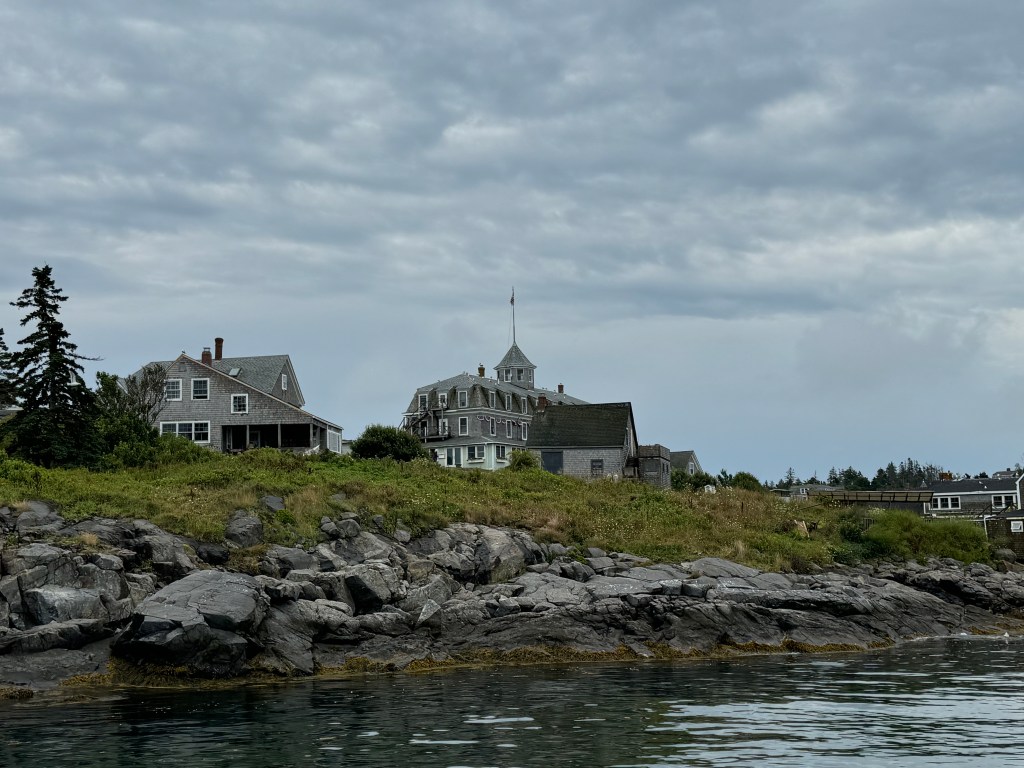
Monhegan is an island ten miles off the coast of Maine. There we hiked miles of coastline, testing our knees- now in their seventh decade- on the endless ups and downs over jagged rocks that line the perimeter of the island. Each circumnavigation of the island (it takes us about 4 hours so… one circumnavigation per day) ended with a cold beer at the brewery on the island. On day two, a basket of fried clams made their way to our table, too, as an afternoon snack. The feeling of being hot, sweaty, appropriately tired and then refreshed with a beer and clams? Cannot. Be. Beat.

Each evening on Monhegan there is a lovely dinner in the candlelit dining room. Fresh fish, risotto, veggies from the garden in the backyard, blueberry crumble. It feels so good after a big day to shower off, put on some clean clothes and, as my mother would say, “feel human again.” We eat early on the island so we can make the hike up to the lighthouse to watch the sunset. We are not alone- a whole crew gathers- and we watch in silence as the sun slips below the horizon, leaving the sky with its kiss of orange-peach-pink.

Here, I feel singularly myself. I am not a boss, a mother, an administrator, a grandmother, a cook or a preacher. Oh, all those other things are such important parts of me that I cherish but here, I am at my most core self…. the self upon which all of those other identities are layered. This core self is important. It is strong and it supports all the other parts of my being that call me into different roles and functions. Oh, I am “wife” or “partner” here, too. After 40 years (44 if you count from our first meeting), that bit is almost inseparable from my core. We do the things of old married couples- you know, completing each other’s sentences, knowing instinctively on a trip when a nap is better than another walk, and when to offer a comment… and when to keep quiet. After 40 years the lines of me-thee are happily blurred.

But that core self. What is it? There is strength (I thank my mother for that), honesty, loyalty, leadership, faith, practicality, and not a small amount of self doubt and self criticism. These last two don’t help, particularly, but they are me.

Standing in the breeze of an offshore wind, slightly sunburned, tired, the edges softened by the day, I stand firmly and fully in myself. And it is good.

I hope that you get some vacation and a chance to be restored.

Come away for a while

(Mark 6: 31a)

I am lucky to have provision for an annual retreat in my letter of employment. For a few years now, I have used that time to go to the woods on backpacking excursions for nature is a good teacher and a quick-working antidote to the screens, conference rooms and phone calls that make up my regular working environment.  There are other times on retreat when I immerse myself in the liturgical cocoon of our tradition, seeking refreshment by keeping the hours of our church within a monastic community, and those times are balm for the soul.  But there are different benefits to being outside with the Creator and creation which, lately, have won the day for me when planning my annual retreat.

Notice, first, that the word “rest” does not appear in these opening sentences.  Jesus used the word “rest” in the cited bible passage from Mark, calling his disciples to “Come away and ‘rest a while’…” (Mark 6: 31a-b) but a week of backpacking is, honestly, anything but rest.  It is challenging for the body, requires problem solving and decision making, quick-wittedness and flexibility.  Backpacking (at least the way that this novice engages it) is exhilarating and hard.  “Rest” is not part of the equation.

In this past Easter week, I hiked a section of the Appalachian Trail in New York and Connecticut, continuing my effort to “connect the dots” of this 2,190-mile trail that wends its way from Springer Mountain in Georgia to Mount Katahdin in Maine.  I’ve got just a small amount of the full hike completed- from the Shenandoahs in Virginia through West Virginia, Maryland, and up to the middle of Pennsylvania, and now, a hunk of New York and Connecticut; there is plenty left for me to complete in my retirement!  I’ve done the “easy” parts of the trail so far.  Hiking in New England- especially in the Presidential Range of New Hampshire and through Maine- requires a level of physical fitness and conditioning that is beyond me right now.  I hiked this past week with my daughter, Emma, who is a steady encourager, leading the way up the hills and exercising great patience with me, 30 years her senior.  This is the second year in a row that Emma has given up her spring break from the school that she works at to accompany me on my AT quest. I am grateful to her for her willingness to fly across the country and tramp about in the early spring woods with me.

Because the lunar calendar picks the date of Easter each year, (and Emma’s week of spring break always follows immediately on Easter), our trip took place in early spring this year.  Hiking before the leafing of the trees allows for beautiful views across hollers and glades that would be obscured later in the season, and it is guaranteed at this time of year that the brooks and streams will be running with plenty of water.  There are no mosquitos, gnats or black flies to bother, and my usual high-alert for snakes was even turned down a notch. Do snakes come above ground when it is 35 degrees?  

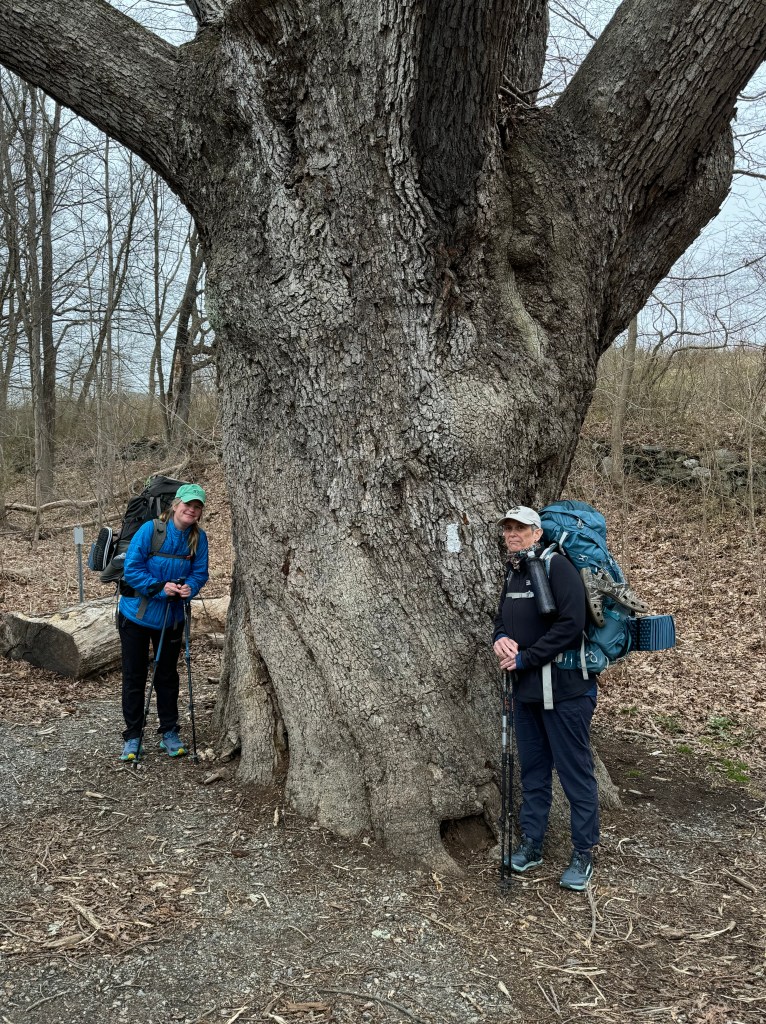
Our hike began at the great Dover Oak near Dover Plains in New York and finished up in Salisbury, CT.  We skipped over a section in the middle that we had completed last year, but our time was spent in the portion of that tri-state area where I spent summers, growing up. It was familiar territory.  Despite the familiarity, though, there were lessons to be learned and well-conceived plans to be re-thought, as the temperatures dropped, the winds picked up and the spring rain turned to snow.  We spent a couple of nights indoors instead of in the shelters or our tent.  It wasn’t that we couldn’t have managed (why does one buy a 17 degree sleeping bag if not prepared to use it?) but it was less about physical comfort and more about time management that drove us indoors: On both nights when we “took a room in town,” we had arrived in the driving rain at our shelter for the night by 3 PM and simply didn’t want to sit in the rain for 5 hours before settling down for the night.  In both instances, the next shelter was too far to get to before nightfall, we were physically spent, and the thought of a dry hotel room that was easily accessed by walking a couple more miles to catch a shuttle into town?… that was an adventure worth pursuing.  And so we did- and it opened up a whole new pocket of the AT Experience that included meeting shuttle drivers (experienced local hikers who care enough about the trail and its community to spend their time giving rides to folks),  securing lodging in small town motels, walking into restaurants with water pouring off of our backpacks, and making coffee and oatmeal in the morning in a motel bathroom using a camp stove.

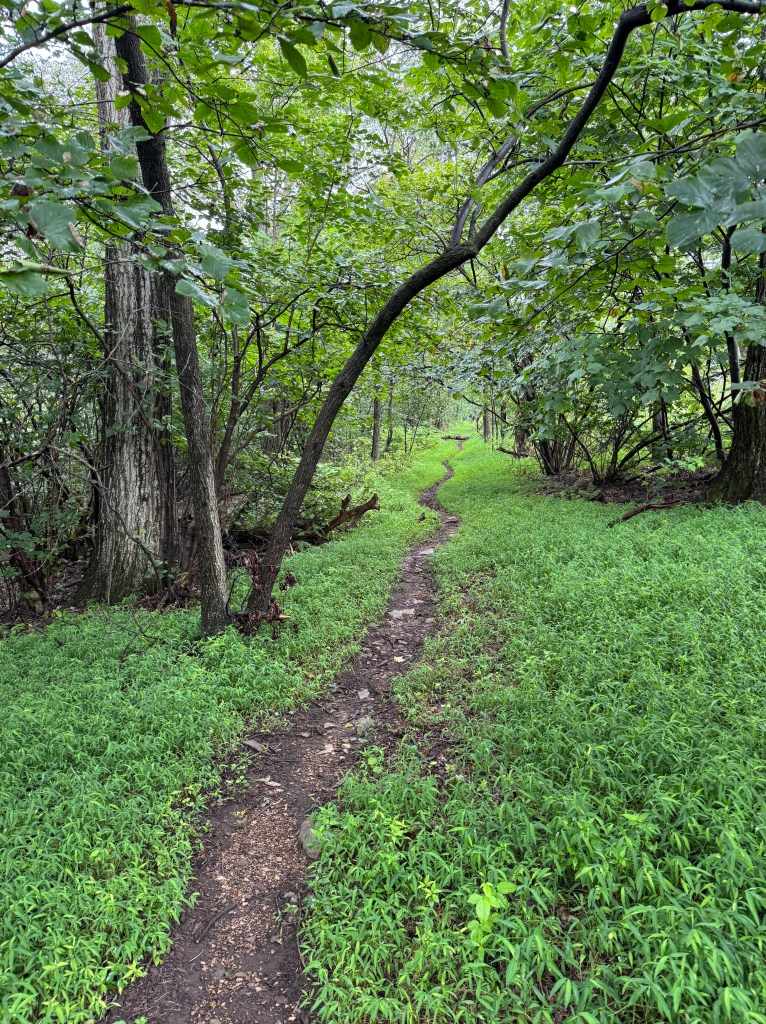
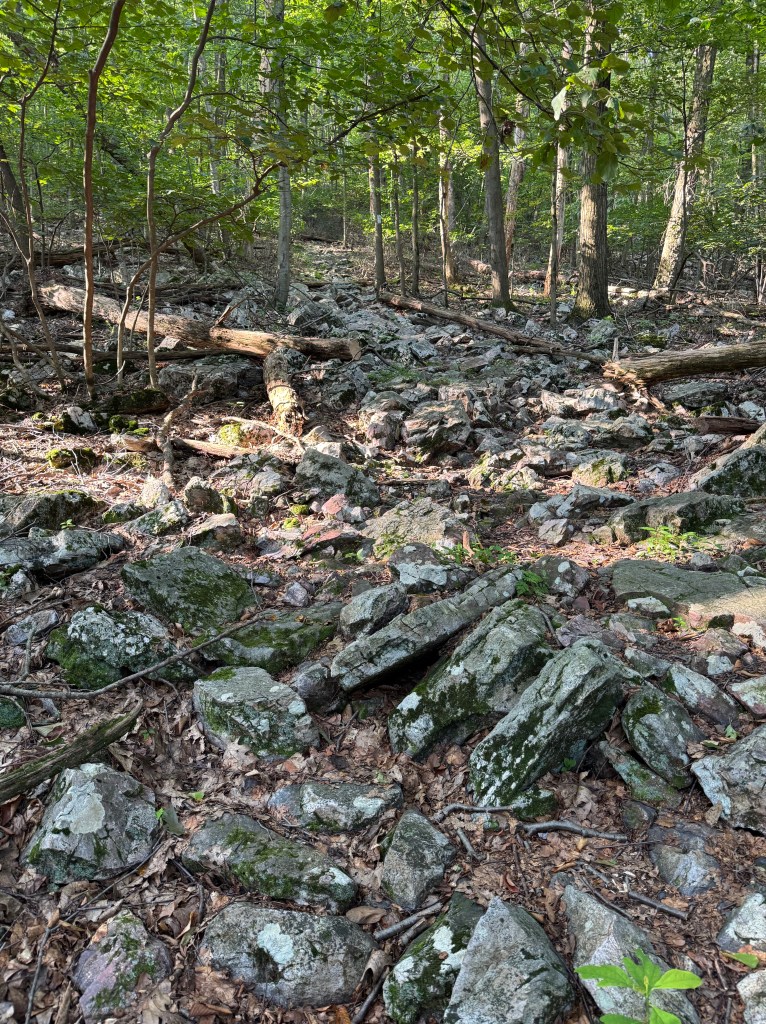
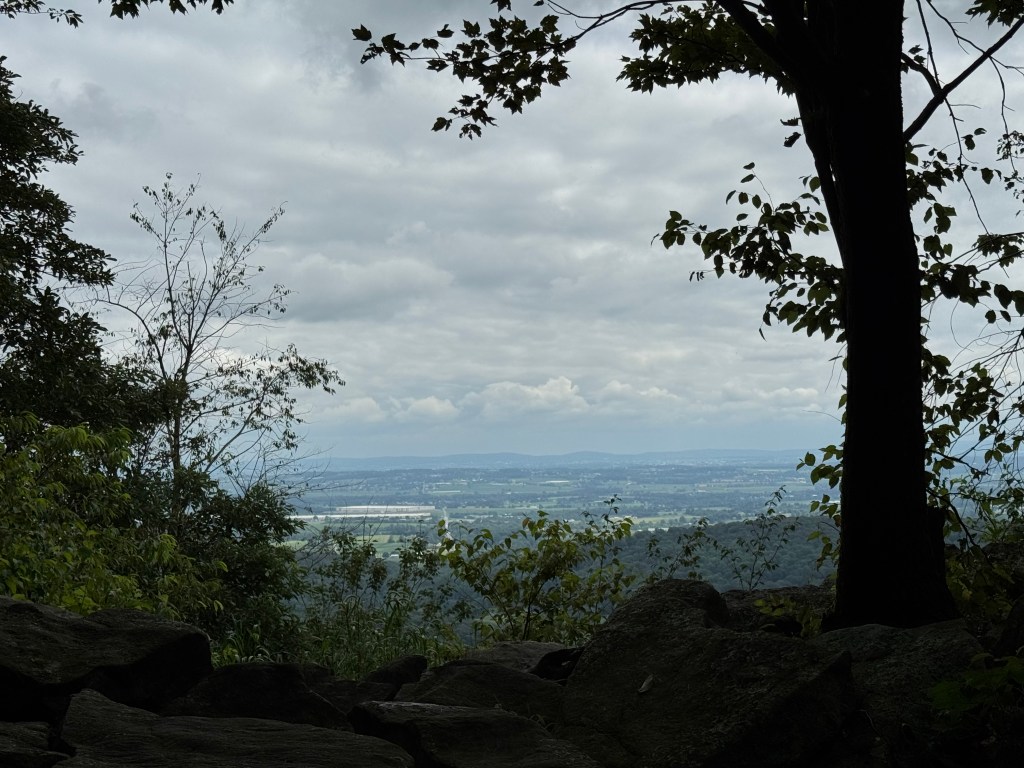
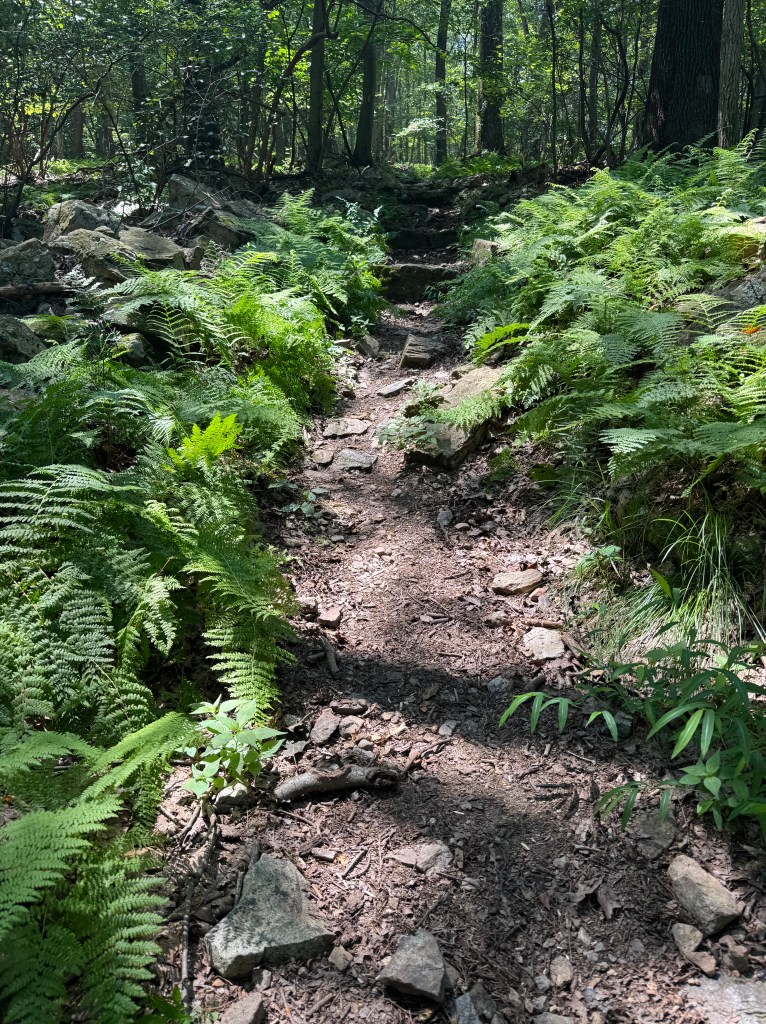
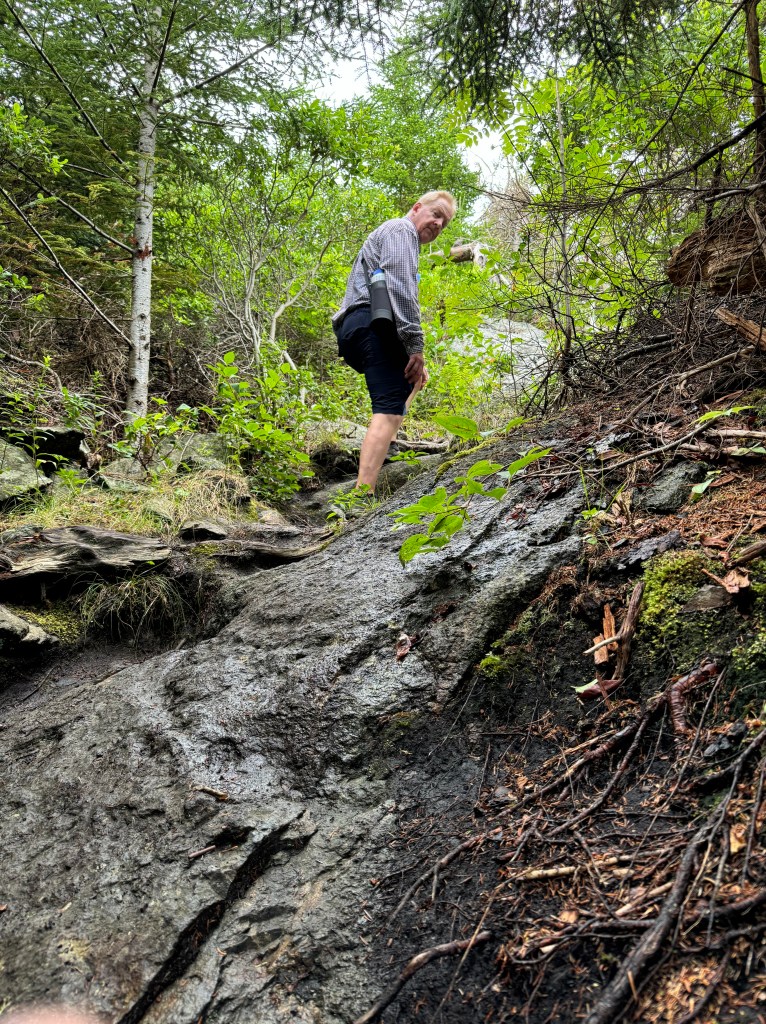
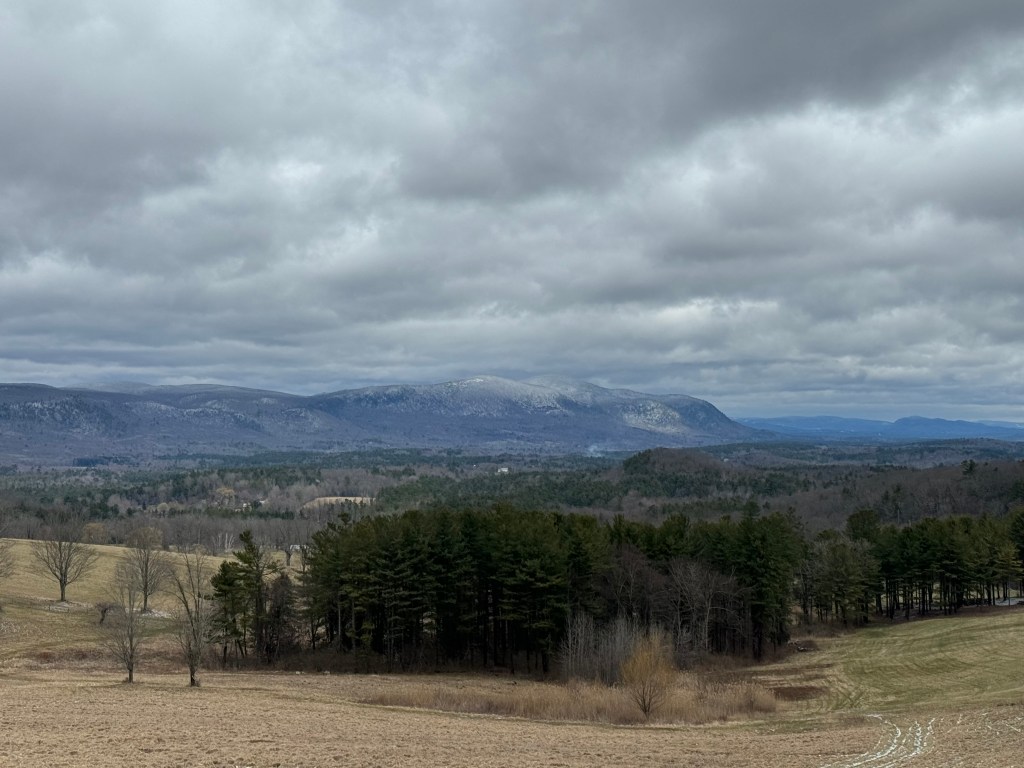
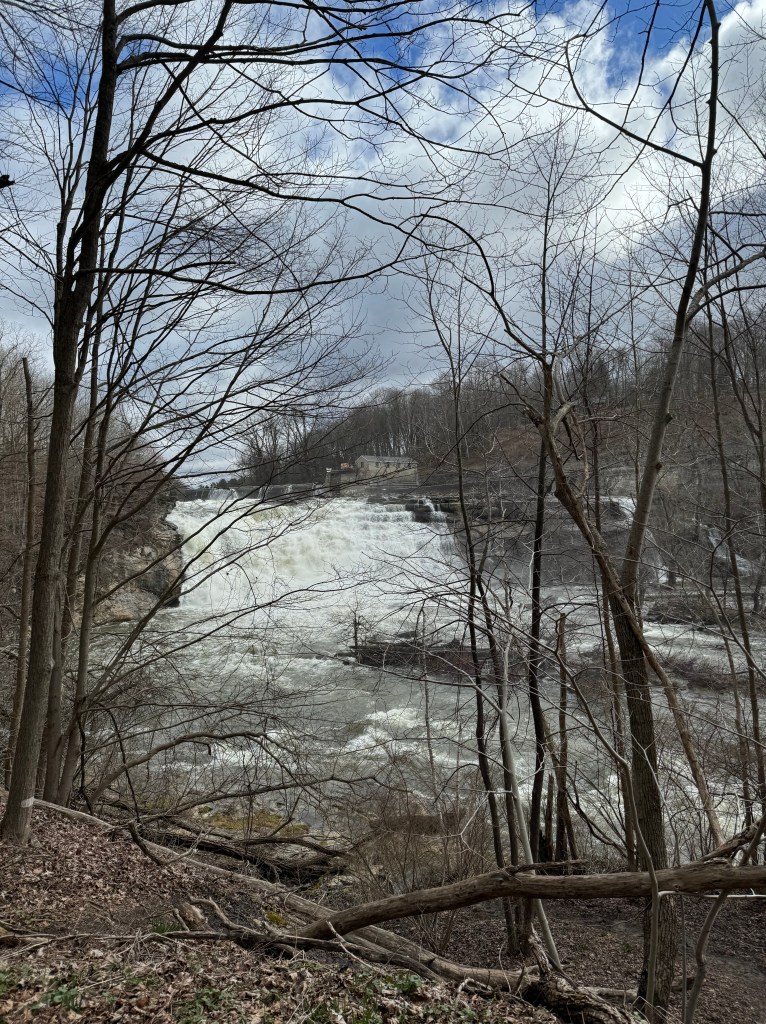
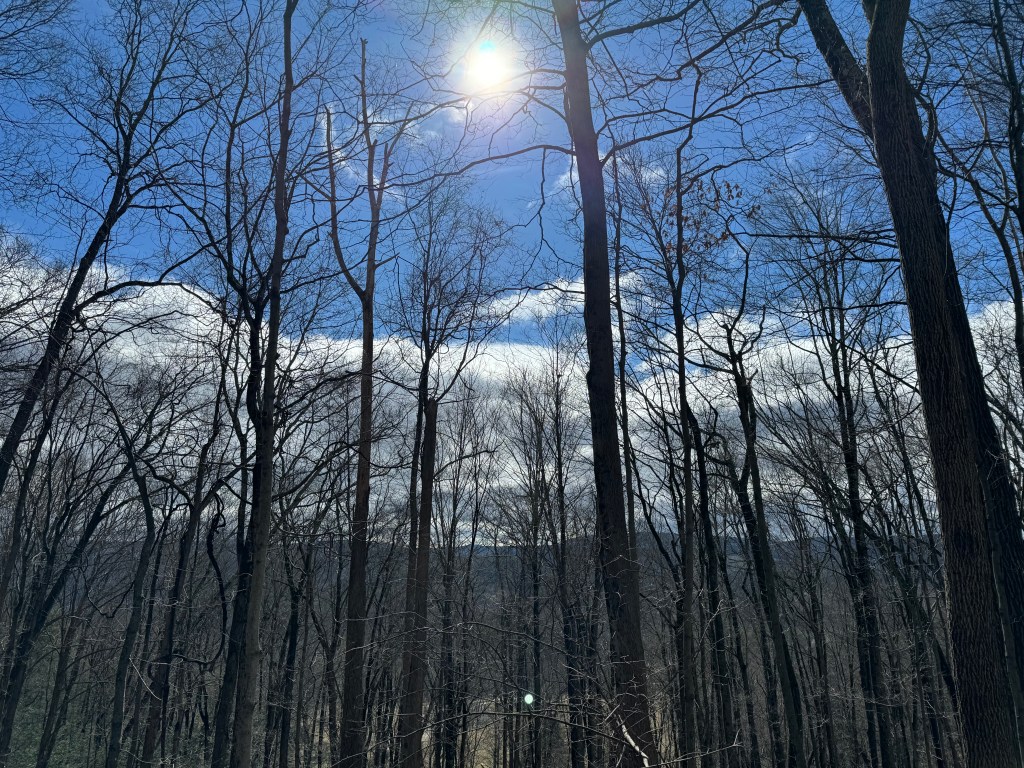
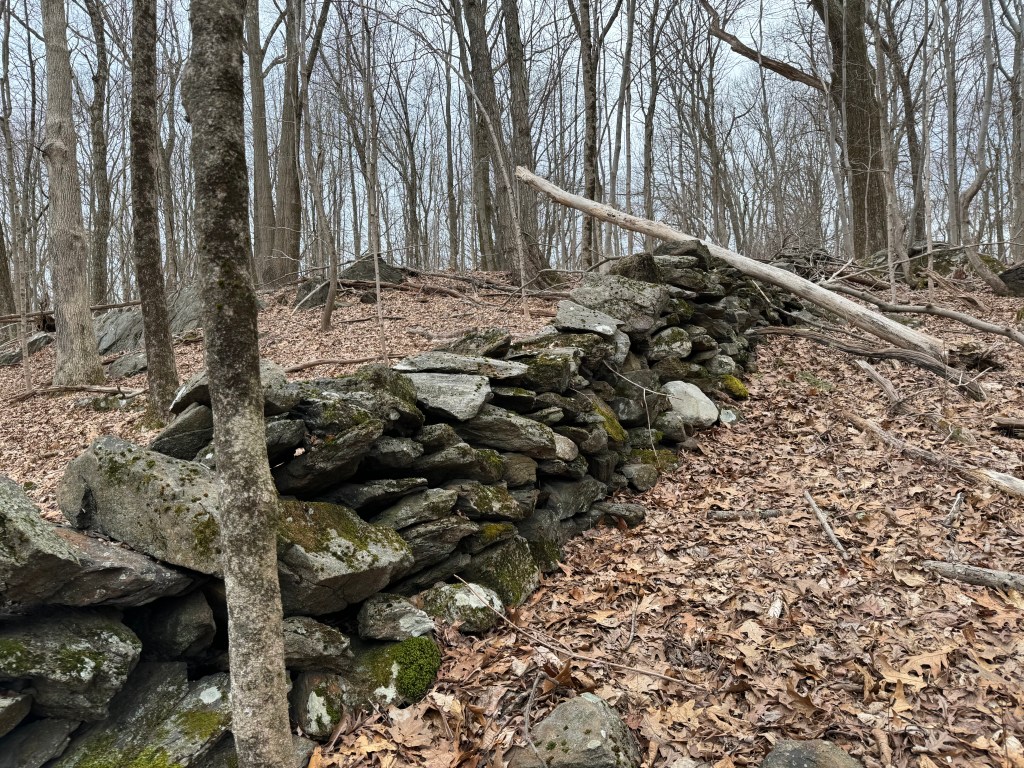
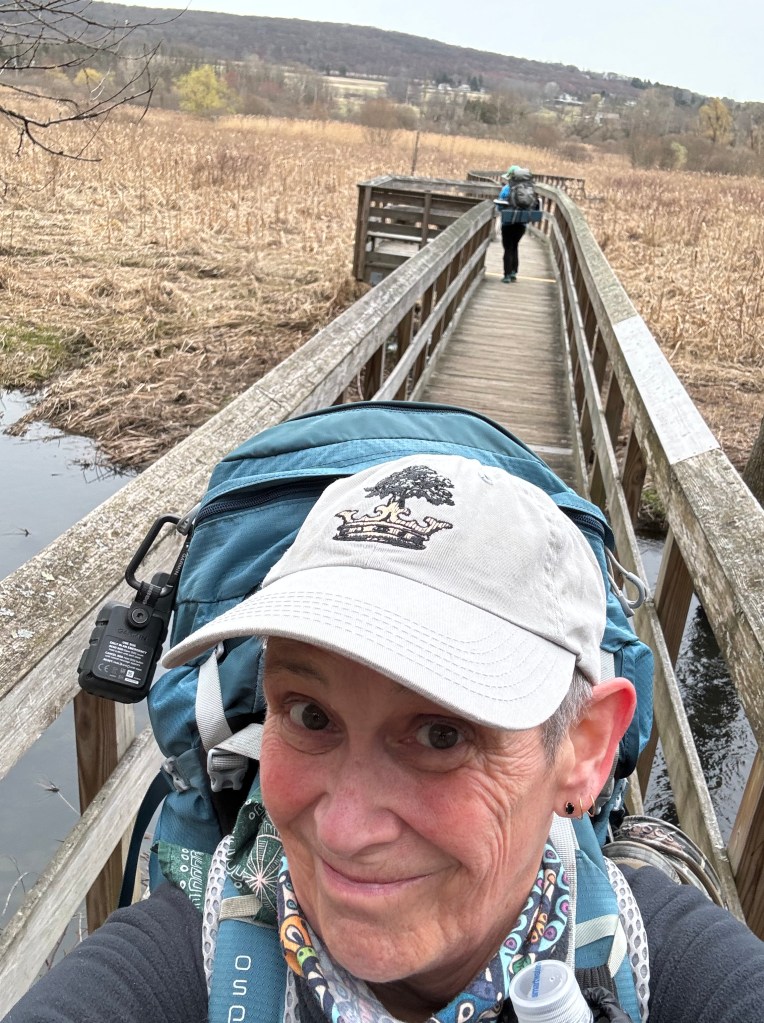
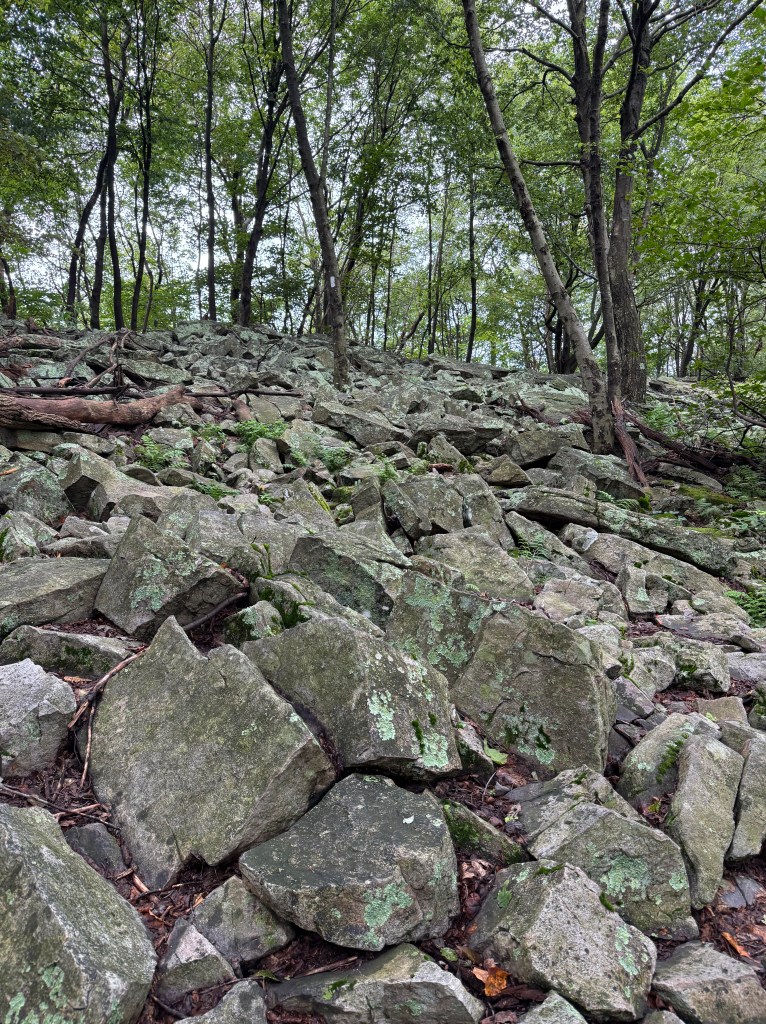
A few pictures within this blog post allows the beauty of Creation to speak for itself.

Here are some of the lessons that I learned (or re-learned) on this retreat:

  1. Humility.  There is an old Breton Fisherman’s prayer that says: “Protect me, O God, for the sea is so big and my boat is so small.”  As I am now in the middle of my seventh decade and not in the best physical condition of my life, the physical challenges of hiking over mountains (even small ones in NW CT) with a 30-pound pack on my back are real. I stop a lot going uphill to catch my breath and allow my heart rate to go down a bit. I feel the strain of my calf muscles and my hamstrings as they labor to get me where my mind is willing me to go, and I am both in awe of the human body and what it can do while simultaneously humbled by the terrain and its ruggedness.   
  2. It’s not a battle to win. The challenges of backpacking can easily set up an adversarial relationship between the hiker and Creation. Hoping to “crush” a climb over a peak suggests that, somehow, the hiker has prevailed when they are finally on the descent, but the truth is that, in fact, they haven’t. There’s no “winning,” or contest, or “crushing” on the trail as much as there is a learning to become one with the Creation and move within it.  That might sound a little bit too “woo-woo” but when I learned not to make a big sigh at the bottom of a steep climb and look at it as something to get past or achieve, but rather, as simply what Creation (and the trail) had to offer me in the moment… it became a little more enjoyable. We all have our favorite parts of hiking:  for some, the downhills are the best parts and for others, the steady climb up to a ridge is favorite.  A switchback that allows moving horizontally along a hill’s face with just a slight ascent is a beautiful thing, and who doesn’t love a good stream crossing on a log or series of rocks to hop on?  Hiking the trail can be seen as a challenge because it involves physical activity that my day-job does not serve up on a regular basis, but it is just different, not something to “win.” (I’ll save my competitive nature for the croquet pitch in our back yard this summer).)
  3. The mountain is not going to move.  There is a parable in scripture about how  “those who have faith can move mountains,” (Mark 11:23) and, while I consider myself to be a person of faith, so far, I have not had any luck in this department.  The beauty of the AT is that it is a single footpath marked by white blazes with one way to go.  On the few occasions when I have diverted from the trail to avoid a large boulder climb or to try to find a faster or easier way to get to the next summit, I have discovered that the trail is always the safest and the best path.  And, I’ve learned that one step at a time is what moves a body up and over a hill or down and around a rocky descent.  The mountain will not move. It will not lie down. The rocks will not turn to soft moss, the water in the overflowing stream will not stop, and the rain- if it is raining- cannot be turned off like a faucet.  The temperature is the temperature, the bugs, snakes and bears live in the forest, first, and we are their guests.  And so, we pick our way through, gently, and carefully, honoring what has been put in our path.
  4. Flexibility wins the day over hard-line planning.  While I consider myself still in the novice category, I have gone on at least a dozen different backpacking trips, now, involving multiple days and nights on trail.  I’ve spent hours beforehand mapping my routes, calculating mileage, looking at Youtube videos of the places that I am going to hike, planning menus, packing and re-packing gear, and imagining how the trip will go.  And, not once, has the trip gone as planned. Not once.  I’ve under-estimated my capacity for mileage, overpacked on food, changed my mind about staying at a shelter because the “vibe” wasn’t right, gone more miles than I’d planned because of a group that I’d fallen in with while hiking, or switched up the plan because of the temperature, or availability of water, or recent bear activity… there are so many variables.  For a trail that is a single footpath headed in one of two directions (North or South).. there are lots of options. And so, even though I am a Myers-Briggs ENTJ and Enneagram #3, (personality types that like plans and achievement and strategy)… I’m learning how to assess, respond, and change plans when needed. (Sometimes it’s easy, and the needed changes are evident, and other times, it’s a gamble.)
  5. Creation’s re-generativity is a model for our own self-care. There is something about being in the woods at the dawn of spring that is exhilarating.  It is a privilege to watch the earth come alive again after winter.  The buds on the trees ripened in the week that we walked, the moss was emerald green, raspberry vines pulled at our sleeves with their thorns and still tightly wrapped leaves, and the bare branches of trees knocked against each other in the wind, offering their own percussion to our hike.  I was keenly aware of the hardiness of nature and its ability to re-generate and give birth again to green leaves, verdant pastures, clear pools of water along rock-lined brooks. I was also keenly aware of how we are responsible to care for this gift of Creation and to tread lightly.  I love the rhythm of nature and its regeneration.  And I recognized that this trip was an important part in the regeneration of my spirit after a season of hard work, separation from my daughter, and a need for re-creation.  

I am home now, in my familiar chair in the living room with a fire in the fireplace.  I have a dining room full of equipment to put away and the first load of laundry is already in the wash. Emma sent a text at 3 AM that she’s made it back to Sonoma. And I am already imagining the next trip, the next section of the trail to encounter, my next turn to learn, again, from the wisdom of Creation.  My laptop just sent a banner across my screen telling me that my time online last week was significantly lower than previous weeks.  Yes, I know.  And now, to the emails awaiting me.

#

a little bit feral

this kitty played hide and seek with me in the tall grass on the AT

It’s that time of year. The kids next door to us went back to school today. Their photo on Facebook showed neatly pressed khakis, matching blue polo shirts and scrunchies, new lunch boxes, sneakers and backpacks. As they were headed out, full of promise and excitement for the new school year, I was still in bed, musing about the day that stretched ahead. See, I’m not quite ready for “back to school,” or “back to work…” I’ve still got to shake that “little bit feral” that I picked up over the past three months of sabbatical followed by a month of vacation.

I had a glorious time in the wild this summer. I enjoyed four long backpacking trips on the Appalachian Trail. My section hikes were challenging and each one delivered just the right amount of sweat, scraped shins and dirt rings around the top of my socks to satisfy my grubby inner biophilic. It’s hard to explain, really, but the appeal of climbing tall rocky grades, wandering under the canopy of the summer’s leafy trees, splashing my hot face in cold pools of water, and falling asleep in my tent to the thrum of cicadas and the conversation of owls gives me a thrill. I also spent many hours sequestered away in “Viriditas,” my prayer shack in the woods. This micro cabin with its tiny wood stove offered me a comfortable but rustic sanctuary to sit and reflect. Outside of each window there were nothing but green leaves, and the occasional falling acorn or scampering squirrel on the metal roof kept me from wandering off too far into my own thoughts. I wrote, rested, and prayed my way through most mornings in the prayer shack on the days that I was home. Back up at the “big house,” I also cooked delicious meals and enjoyed a slower pace of life.

I got a lot done- lots of downsizing and “Swedish death cleaning” going on in our house- and, sorting through the last seven decades, I managed to commit several ideas and stories to paper (or laptop). I did a remarkable amount of writing, but I did it on my schedule and, most importantly, in shorts and t-shirts. If I had to put shoes on, I reached for my camo crocs. Yeah, feral. Maybe more than a little bit.

Now, there were a few breaks that required me to be shod and run a comb through my hair: I had a trip to Mexico with our girls and my niece, which was followed a month later by the wedding-to-end-all-weddings at Grace Cathedral in San Francisco where our daughter Harriet and her now husband Ryan were married. That trip alone stretched my fashion sensibilities: in one 48 hour period I had 4 costume outfit changes requiring different shoes for each event. I was surrounded by lithe, glowing, dewy, young women. I was agog at the beauty.

I went shopping this afternoon. In spite of the fact that I spent many days climbing up and down mountains and sweating through every pore, the “throw-caution-to-the-wind” and summer-long enjoyment of cookies, ice cream, gin and tonics and sauvignon blanc at any and every opportunity seems to have caught up with me (or at least my waistline). And so, I found a few things today to get me back in the grown up groove as I head back to work next week.

One of my friends from my Canon-days in the Episcopal Church in Connecticut used to subscribe to a hard and fast rule for her “back to school” (or “back to work after the summer”) period of time: No Open Toed Shoes or Sandals after Labor Day. Wow. She meant business!

I don’t think I’ll show up in my crocs and I’ll likely to comb my hair, but for now, that’s the most I can promise.

See you very soon.

Stuff for sale. Heartstrings included.

Since January- more than half a year ago- I’ve been working at it. I’ve been working with a new mindset, a new focus, a new direction.  Unlike other New Year’s resolutions, this one has stuck, and more than halfway through the calendar year, I feel like I’ve embraced my new attitude of buying less, sifting and sorting, and letting go of a lot of literal baggage that I’ve been carrying around for decades.

Now, don’t be fooled- our 2,838  sq. ft. home is still amply filled with all the stuff of modern living-  a big dining room with a long table, hutch, and six chairs; two different living room areas with sofas, overstuffed chairs, occasional tables and brick fireplaces (two!); two office spaces- his and hers; a sun porch for reading and dining; a big bedroom; a guest room; a kitchen that is perhaps a little aged, but still very functional, and a big two-bay garage… Our not-so-little-cabin is filled with nice things. Not expensive things, but nice things. Our “style” is not formal, and our furnishings reflect our tendency towards simple things, but, hey, there’s a lot of it.  A lot: The six-foot oak library table that we bought at an antiques store because it “spoke to us,” the lovely but rickety tea cart that was my grandmother’s, a piano that we don’t play often enough, a small pine bookcase built by my father, a 500-pound skate sharpening whetstone wheel that was once an item used faithfully each week, a heavy workbench in the “shop” that belonged to my husband’s father, and paintings- pictures of places that we have loved and created by people whom we love- hanging on the walls of each room.  I recognize our privilege reflected in the bounty of our stuff in this suburban cabin- and I am grateful.

This year’s quest for minimalism has really been about two things:  Not acquiring more stuff that I don’t need… and … getting rid of stuff that will not serve me in the future.  The first part hasn’t been too hard (though the frequency with which the Amazon truck still pulls into the driveway is alarmingly too often) but it’s the second part- getting rid of stuff- that has been challenging.  I’ve done it- but in some instances it has been nothing less than soul-wrenching.

Take yesterday’s neighborhood Yard Sale, for example.  Ummmm.  It was rough.

I had spent seven months sorting through the storage section of our basement and deciding which items I could put out in the yard for folks to purchase.  Eight margarita glasses.  Six champagne flutes. An oblong fish poacher that I use every other year.  A trifle dish. Fondue pot. Chafing dish liners and a big heavy circular brazier with lid.  These items- most of them related to my (former) life of catering and hosting big parties- were no-brainers. Into the yard sale pile they went.  Dozens of wine glasses. Several old chairs. Arts and Crafts materials, beads, and reams of beautiful colored, heavy weight paper. Empty sketch books. Vases. Platters. A travel case with room for a projector, laptop, markers, and flip chart stand from my “traveling canon” days.  Again, no brainers.  Out to the driveway with florescent pink price tags noting deep discounts!  But there were some things that had strings still attached to my heart:  an antique 40-piece set of ruby red glasses with crystal stems, tin cookie cutters from my days of baking at Christmas with our kids, a green fluted candy dish, a pewter tray that we got 39 years ago as a wedding gift, a domed terrarium that, in spite of the fact that I could never keep anything growing in it, still reminded me of the priest-friend who gave it to me.  These were hard things to sell.

But then, the day of the sale arrived.  I’d been away all week on a backpacking trip and arrived home the night before- tired, dirty and worn-out,  the sign of a successful backpacking adventure.  The garage was filled with all the yard sale items.  They were all priced.  All I had to do on Saturday was get up early and, with the help of my husband, drag them out for display on tables and a few large mats that we laid down in the driveway.

The sale was to begin at 8 AM.  Neighbors up and down the street were also preparing their goods for sale in their driveways.  I began setting up at 6 AM.  By 6:15 the first car drove up our (somewhat long and somewhat steep) drive and a man jumped out asking for video games.  Nope. None of those. Sorry. By the way, you are an hour and 45 minutes early.  At 6:30 another man wandered into the side yard, surprising me, (he approached by our neighbor’s driveway) and he started poking around.  Not yet through my first cup of coffee, I told him to come back at 7:00.  By 7:00 the yard was filled with people, there were cars parked up and down the street and, apparently, the sale had begun. It didn’t matter whether I’d finished my coffee or not.  Many of our items went fast.  They were priced to sell: Most things were one or two dollars.   But, despite the prices, folks wanted to bargain.  One box held a collection of art materials- all unused and in pristine condition- that, all together, was worth about $100.00. I was hoping for a classroom teacher to buy it. The price was $5.00.  A nice guy- but not the teacher I had in mind- offered me $3.00.  I swallowed hard.  I countered with $4.00.  He said he’d take it to his church. That made me feel better.  And so, off it went.  While I was loading it into his car, he picked up the fish poacher.  Wait. Did he pay me for that?  Ugh.  I waved them goodbye as they backed out of the drive.

There were folks who asked to pull their cars around on our (rain softened yard). No.  One man called out- as he trampled on the hostas planted under the pine trees in the front yard- that he remembered walking under these pines as a boy when the whole neighborhood was a pine grove. Hmm.   It was a bit of a mad-rush that was a little overwhelming, but it was the scrutinizing of my stuff, my goods, my life… that was hard.  Okay, maybe that’s projection, but I didn’t think that it would be so difficult to have people pick up, turn over, appraise, barter and/or reject stuff that I claimed as part of me. It was, perhaps, the flotsam and jetsam of my life, but still, it was mine.  

Who knew it would be so hard?  Maybe I don’t have the stomach- or heart- for this kind of downsizing.

At the end of the day, we had sold about 2/3rds of our stuff and made a whopping $125.00- these days, about the cost of a quick trip to the grocery store.  We loaded up most of the leftovers and took them to Goodwill.  

The antique ruby stemware did not sell.  I’m a little bit glad for that. It’s back in the house, taking up space.

#

you are what you eat?

weekly menus

For a long time I’ve said that cooking is a spiritual practice for me. For a while- before it was cool and a real art form-  I had a food blog (www.prayerkitchen.wordpress.com), now inactive. I’ve always loved sharing the different stories from my kitchen. Cooking is an important creative outlet for me. I love flavors from around the world and prefer the taste of Middle Eastern and Mediterranean menus to our typical American fare. Thanks to Buddhist monk Edward Espe Brown from the Tassajara Zen Center in California and his wonderful cookbooks, I have learned how to slow down in the kitchen and to offer thanks for the ingredients before me, as I work to prepare nourishing meals.

There are stories about my father as an adventurous cook. Though he died when I was a toddler and my memories of him are dim, my mother talked about some of his more creative culinary exploits:  a whole roasted suckling pig that barely fit in the oven, venison roasts from deer that he had hunted, and Baked Alaska burst into dramatic flame at the tableside.  (There are other non-food stories about my father that express his adventurous spirit, like the time he and my mother covered their faces in Vaseline and then gobbed on plaster of Paris to make harlequin masks of themselves which they then swapped and wore to a New Year’s Eve costume ball.  I like to think that I got my father’s creative spirit in the kitchen.  My mother was a good cook, but she did not enjoy it much, and she had a large family to cook for every night in the kitchen of our 17th c. home; now, we did have a refrigerator and stove, but no lovely granite countertop prep areas like the spacious kitchens of today! Our kitchen was small and dark, with a low, antique pine table next to the stove as the sole space to prepare anything.  My mother created menus that allowed her to do the bulk of preparation during the day when we were out from underfoot, and so we ate many casseroles and roasted meats and vegetables.  This “make it ahead” style also allowed my mother to have a civilized cocktail and conversation hour with my stepfather when he got home before launching into dinner.  Some of my favorite dishes today are things that my mother made- for sentimental reasons, I know:  chicken divan, beef stew, and her corned beef hash casserole.  My mom always had a salad at her end of the table- as a child I could not stand the bitter greens- kale, chicory and endive- that she favored.  Today, I am the Queen of Kale.

When I was growing up we ate in the dining room by candlelight with full table settings of china and sterling flatware.  We weren’t trying to be fancy- it was just what we did.  For several years, there were 8 of us gathered each evening at the table:  my twin stepsisters, my two brothers, my sister, and my parents. (My other siblings were older and making their own households.) My mother sat at the kitchen end of the table (a custom I follow for myself, still today) and my stepfather sat at the opposite end, serving up the evening’s entrée onto a big stack of plates before him.  We said grace. My father’s grace: “Bless, O Lord, this food to our use and our lives to your loving service.”  My mother’s grace: “We thank thee, O Lord, for these provisions. Bless us, guide us, keep us, save us, for Jesus’ sake, Amen.” 

We had dessert on the weekends, as I remember.  Certainly not every night.  On occasion, my mother would try to get away with serving canned peaches for dessert.  No thank you.

My mother was tall and slim.  Until I was an adult and struggling with some of my own food issues, I didn’t understand that she felt pressure to “maintain her figure.”  In those days (the ‘60s and ‘70s) the approach to staying thin was to skip meals, drink lots of black coffee, smoke cigarettes, eschew certain food groups (my mother didn’t eat many potatoes or much bread) and buy chewable meal replacements/appetite suppressants at the drug store.  I think that this was typical for the time and place (upper middle class, white suburbia) where we lived.  

When I grew up and became a mother myself and sat at the end of my own dining room table- at the kitchen end- I kept a lot of our family traditions:  Regular mealtimes. Grace. Candles. Meat, Veg and Starch on most nights, and some more bold flavors at least once or twice a week in the form of “international” cuisines. We expected napkins to be in laps, elbows to be off the table and for the children to ask permission to be excused.  We weren’t draconian about table etiquette, but I’m glad that we created some sort of decorum for our children as they grew.  Many nights we listened to music as we ate, and on Sunday nights we’d listen to a local Compline service that was broadcast on the radio by two Episcopal priests. I think that I cooked a good variety of food for our family with an emphasis on “whole” and “clean” foods.  Our children had adventurous palettes which I credited to feeding them just about any and everything that I could, as soon as they had teeth.

Today, as a household of “empty nesters,” not much has changed.  I still love to cook. I don’t get paid for it anymore (I spent about 10 years in college and post-college working as a chef,) and these days we eat dinner on our laps while watching Jeopardy! –  but the basics are the same:  I love to play with recipes from other cuisines- Thai, Mexican, Asian, Mediterranean, Middle Eastern foods to name a few- and I find it to be a primary source of connection for me to God’s creation and the good stewardship of our health and bodies.  There is no small amount of irony, of course, how this great joy has also been at the center of my own quest to achieve self-worth and a positive body image.  I’m about 50/50 over the course of my lifetime, I think, in achieving a healthy attitude about it all.  Beginning with some painful episodes from a chubby childhood that I won’t recount here but will save for another time, I have had a lifetime of a dysfunctional and disordered relationship with food.  Interesting, isn’t it, that the thing that brings me so much joy has also been, in different seasons of my life, also my greatest nemesis?  These days, as I am learning to live with a body that is mid-way into its seventh decade, I’m discovering new things about how a body “settles,” what its limits are, and how it is important to press at those limits gently in order to stay well (a summer experience of persistent tendinitis is teaching me that lesson).

And so.

I’ve done a bit of an exercise this week examining some menus from the past year or two. It’s been my custom for at least two decades, now, to create a weekly menu on my day off- Monday- and to shop and cook for the week ahead, all on one day. I have stuck the menu portion of my shopping list into the kitchen bookcase at week’s end, and this week, as I’ve been sorting through my bookcase, I discovered these many slips of paper- culinary artifacts, of a sort. I decided to do an inventory of our recent menus to see what kind of trends, if any, I could discover.  Now, the whole thing is skewed for a few reasons that would toss this “experiment” out the window of any statistics class: 1) There are only 41 weeks’ worth of menus for a period that I know to be more than a year. 2) Most menus only feature 4 or 5 days of food (I plan on leftover nights) and 3) this doesn’t account for “pizza nights,” “Chinese and/or Indian takeout nights,” or dinners out with friends or for work, or for vacations.  But this sampling- random, I guess, would be the best statistical assignation- will still give a look at what’s on our table, night by night. 

Some of the old favorites are there:  Chicken pot pie, Falafel in pita pockets, Lasagna, Fish Chowder, Mujadara and Dal… and there are some things that only appear once:  Pho, tuna casserole, steak with chimichurri sauce.  Now, this isn’t to say that we don’t like Pho, tuna casserole or steak enough to have it more often, but it is interesting that in this “random sampling” of a couple of years’ menus, that there isn’t more repetition…. Except for… beans.  Wow. We eat a lot of beans.  White beans, baked beans, bean salads, beans in casseroles and tacos and a million different ways.  Having been vegan for a year, I guess that shouldn’t come as a surprise.

The data showed that in 41 weeks of menus, I planned for 196 meals. That’s somewhere between 4-5 meals per week which makes sense for my pattern:  plan for the weekdays, eat leftovers on Saturday (or get takeout) and shop separately for Sunday. Sunday dinner has always been a bigger, or nicer meal for us- with dessert!-  and I just can’t think that far ahead on Monday to plan six days out…

Of those 196 meals, it turns out that the greatest number of them (83%) were Vegan, 16% of them featured chicken as a main ingredient, 10% beef, 10% pork, 8% fish, and a smattering of lamb and turkey.  Broccoli seems to be my “go to” veg. What this tells me (and as I look at the menus) is that more often than not- even when it wasn’t our dedicated (2002) “Vegan Year,” we prefer plant-based meals. Over the course of our culinary lifetimes? No, but in the recent past, yes.

When I broke the menus down by nationalities or ethnicities, only 28% of the food was “American” (ie: chicken pot pie, fish chowder, meatloaf made with beef and pork), 14% was Mediterranean, 9% Indian, 8% Asian, 8% Mexican, and a smattering of Middle Eastern, French, African, Thai, and Vietnamese.  There is another category that came in second, actually, at 16%: it’s a category that I’ve made up: “Hippie.”  You know: brown rice, veggies, tempeh… or Buddha bowls, or other non-specific ethnic, whole grain, crunchy, granola-seeds-nuts-berries kind of food.  I guess other than American, that’s my next-best-favorite.

These results surprise me a little bit because, for someone who loves Middle Eastern food (give me a pita with feta cheese and ground lamb, black olives and currants, please!)… there was precious little of it. Again, random sampling.

If you are still hanging in there with this post, I’d love to know what your favorites are.  What do you love to cook? What do you love to eat?  What are your family food traditions?

As for me, it’s lunchtime.  Cheers.

The Little Colonel

My grandmother Alice Elizabeth Manson was born on Dec. 26, 1898, in Williamsport, Pennsylvania.  Her father, Frederick E. Manson, originally from Searsmont, Maine, had moved with his bride, Alma Millay from Bowdoinham, Maine, to Williamsport, Pennsylvania to take a job as the Managing Editor of Grit, an agricultural newspaper catering to an audience of farmers and homesteaders.  (Grit:  “rural American know-how.”)

My grandmother Alice, on the far right, her sister Frances on the left,
and their mother, Alma Millay Manson, center

My grandmother had one full sibling, Frances Viola.  Their mother, Alma, was of fragile health and died in 1907 after a series of strokes, when my grandmother was nine.  Frederic E. later married Catherine Rentz and, together, they had three daughters:  Helen, Catherine Jane, and Ann Pattee, and so there was a household of five daughters.

Among the toys and games of these five young girls was a series of books that, 60 years later, came into my possession.  The Little Colonel was a series of books by Annie Fellows Johnston that chronicled the life and times of a young girl in Kentucky whose grandfather, Colonel Lloyd, was a plantation owner and Civil war veteran, having lost “his only son and his strong right arm to the Southern cause… thirty years earlier.” (The Little Colonel, pg. 6, LC Page and Company, Boston, 1906). This places the setting of the early Little Colonel volumes at about 1895.  The series- 15 books in all- was published between 1896-1914.  Also included with the series was a book of paper dolls so readers could act out some of their favorite scenes and continue the story of the various characters in the books.  I loved reading these stories in the musty, yellowed volumes: Some of my favorite titles were “The Little Colonel’s House Party” (in which she gets to have a group of friends stay with her for weeks on end at the plantation), “The Little Colonel’s Holidays,” and “The Little Colonel at Boarding School.”  So popular were these stories that they were turned in to a movie starring Shirley Temple (as the Little Colonel, of course,) in 1935.

Among the characters in The Little Colonel were a black housekeeper, Mom Beck, who lived with the Little Colonel and her mother, the (Sr.) Colonel’s “body-servant” Walker, who lived on the plantation, and May Lilly, a young servant child, about the same age as the Little Colonel.

May Lilly

The books are a period piece that describe life in the time of Post-Reconstruction South. 

On a recent trip to Gettysburg, I was reminded that the Emancipation Proclamation of 1863 only applied to slaves in Confederate states.  (The irony that I am writing this essay on Juneteenth, the day in which we commemorate the news of emancipation reaching Texas in 1865 is not lost on me…). The enslaved who lived in the border states of New Jersey, Kentucky (the setting of The Little Colonel) and Delaware had to wait for the passing of the 13th Amendment in December 1865 to win their freedom.  And even then, some People of Color were still subjected to involuntary labor under the Black Codes which compelled them to work for lesser- or no- wages.

I don’t know what the situation was for Colonel Lloyd’s help on the plantation “Locust,” or for Mom Beck, the loving nanny and housekeeper who cared for the Little Colonel in her house in the village; the relationships between the white folk and their black help seemed courteous and respectful in the books, but friends, any writing that normalizes a stereotype of the “big black mammy” (Mom Beck), or the little black playmate (May Lilly) as a “plantation urchin” in bare feet and an outgrown frock, or a deferential manservant (Walker), or that uses the term “darkies” repeatedly and mentions “low -flung n—–s” is not good with me. Not good at all.

A few weeks ago, I burned an old broken paint box that belonged to my father in the backyard oil drum that we use as a burning bin.  My father died when I was a toddler and I’d been holding on to some artifacts of his that gave me a thin thread of connection.  But in cleaning out my basement and engaging a summer of “downsizing,” I decided that this broken box (a wooden briefcase of sorts) was beyond repair and that it had to go.  I gave it a proper ending by burning it, rather than adding it to the week’s garbage bin along with the coffee grounds, banana peels and chicken bones.  It made me feel good- lighter- to be free of this item that I’ve been dragging around with me for the past few decades from house to house… but also very sad.

I think that I’m going to take my Little Colonel volumes to the bin and destroy them in the same manner.

Book burning- book banning, for sure- has been a big topic of late as school districts and municipal leadership around our country are debating what is and is not appropriate material for our children to read.  Books featuring families with same-gendered parents, or children who are questioning their sexual identity, or stories of transgendered individuals are being pulled from library shelves for their “inappropriate” content.  I consider The Little Colonel, period piece though it may be, to be inappropriate.  So, why is it alright to destroy this collection of writing while arguing against the removal of other writing?  In my mind, it is clear:  the literature that I want to have available to our young readers should be inclusive, loving, respecting the dignity of all people, and not portraying one strata of humankind as better than another.  The Little Colonel, even with its docile portrayal of black servitude, fails that test.  To the bin it goes.

 I do not want my granddaughters- or grandsons- to read The Little Colonel.  I do not want them to see this division of humankind into strata, this cartoon of benign servitude drawn across racial lines to seem acceptable.  I know that there are those who could argue that sheltering children against the reality of our society in which social strata is alive and well is ridiculous, but the not-so-subtle visual that all of the help in The Little Colonel are People of Color and all of the “employers” are rich white folk is not what I want to add to my grandchildren’s formation. The subjugation of People of Color is not something that I want to promote in the handing down of antique literature.  Paper dolls are, of course, a charming old idea, but my grandson seems to be making out fine with his action figures.  And, on inspection, as I laid out the paper dolls on the dining room table last night for one last look, I discovered that May Lilly had only the knickers she was dressed in.  Everyone else had many outfits. I guess May Lilly was supposed to wear hand-me-downs.

Juneteenth, 2023.

Never Quit on a Bad Day

But, why not?

Yesterday I challenged the hiker’s maxim “Never quit on a bad day,” and I came home just a day and a half into a five-day section hike of the AT in Pennsylvania.  I’m working on filling in a long, vertical wall map of the AT with all my section hikes (it’s like a giant “connect the dots exercise”) and I had hoped to knock out a portion of my home state this week while I continue my sabbatical journey of hiking and writing.

The hike started out a little tenuous (pun intended) as I‘ve been nursing some tendinitis in my right foot for a while.  Usually, a morning dose of ibuprofen and some gentle moving around gets me limbered up and feeling fine, but I was wondering if it might be a problem on a several-days’ journey.  

My shuttle driver (a.k.a. my husband) got up early and dropped me off at the trail head about an hour from our home at Clark’s Creek (Mile 1167.6, Nobo).  I both love and fear hiking alone in the woods in the early morning; I’ve convinced myself that if I were to meet a bear on the trail it would be then, as the light filters down through the trees and the mist makes it look like a primordial forest… but… no bears on this morning.  The climb up the first mountain to the ridge was long but not strenuous, and I felt fine.  I met one hiker on his way down- an older, local guy out for his “morning constitutional”- who assured me that other than a lack of water due to a month with no rain, all was well on the trail. I was reminded of my husband’s comment, “My only worry is that there might be little water…”. If you are reading this and planning on heading out to this section soon, please check into the water situation on Far Out.  It wasn’t super grim, but it wasn’t great, either.

Traversing the ridge of Stony Mountain towards Second Mountain was beautiful:  there were fields of ferns, the ruins of an old coal mining town to explore at Yellow Springs (the name is indicative of the yellowy-orange, highly acidic -and not potable, even when filtered- tinted water that runs in small streams in this section), a leafy canopy of leaves keeping things cool, chipmunks, butterflies, a white tailed deer, and some sweet camping spots along the way in stands of pines to take a break.  I made it to the shelter (Rausch Gap Shelter 11.3 miles) in good time, arriving around 3:30.

I was happy to meet two other hikers coming down the .3 mile blue blazed trail to the shelter not long after I arrived; my least favorite part of backpacking is, still, camping alone.  These two hikers, Fearless and Hero, are a story all their own- check out their inspirational website http://www.FearsomeIs.org that describes their mission to raise money for MS.     We shared dinner together and, after making camp, including my many comical attempts at tossing my bear hang over a too-high branch (I got it on toss #8), I crawled into my tent to read the latest edition of The Sun (yes, I carried a small magazine as a “luxury item”) while they made a small fire and relaxed, chatting, as the sun slipped behind the hill.

I didn’t sleep well at all.  Something- Deer? Racoon? Porcupine?- was shuffling around my tent between 1- 2 AM.  I was wary of turning on my headlamp to scare it away in case it was a porcupine; I wanted to remain quill-free.  I had also learned earlier in the day- in the brief moment that I had a cell signal and could check messages- of the diagnosis of a friend’s serious illness, and so I was tossing and turning, worrying about him and his family.  It was, just one of those long, bad nights. I was relieved to hear the birds at 4:45 AM and I moved about quietly, releasing my bag from the hang, making some tea, and artfully spilling oatmeal in my tent. It was chilly and I was glad to have brought my puffy along, even though the daytime temps were promising to be in the high 80s. I swallowed three ibuprofen before stuffing my sore foot in my boot.

We broke camp and the three of us headed north to our first obstacle of the day: The Rausch Creek Beaver Dam.  This creek has been dammed since 2016, the AT guide tells us, and while it is possible to make it across, it requires patience and balance to find solid, dry footing on half-submerged, rolling logs.  I’m not good at estimating distances, but I’d say that the crossing was not quite .2 miles.  Put it this way: from one end of the dam standing on solid ground, you could just make out the white blaze on the tree on the other side of the dam. In between were tall grasses, algae covered water, dead trees standing like sentries, mossy logs, and a few well-placed fallen trees.  We stood surveying the marsh and listened to the bullfrogs.   The first big obstacle in the crossing was at about 30 feet.  Stepping gingerly on small logs and branches, I made it through the wetlands to a massive fallen tree which seemed to be the best path the carry us along for another 25 feet or so.  The trick, though, was getting up onto the log which, as it lay, was about chest-high on me.  The broken trunk of the tree was close enough that you could get a foothold on it and then, using core strength and your arms, lift yourself up to a crouched position on the higher log, but… that’s a big if when you are 64 years old, have little core strength, are bearing an unwieldy 29# pack and are mildly afraid of heights.  I backed off this idea from my straddled position between trunk and log, and let my companions have a go at it.  Fearless hopped right up and walked the damned thing like a ballerina!  Hero was next, and he, too, got up on the log and made his way along towards the rest of the navigation across the marsh.  In awe, I took their picture, waved goodbye, and then retreated, back .5 miles to the 1.6 mile detour along a gravel road and up the other side of the mountain on a logging trail. 

 Here’s the conversation that I had as I walked (imagine those two iconic figures, Devil and Angel, on either of my shoulders):

Devil:  Man, that was a bummer.  You didn’t do it. You chickened out.

Me:      I know, I feel bad.

Devil:  Well, it’s because you’re old, ya know.  

Devil:   And fat.

Devil:  And out of shape.

Me:      Yeah, I know.  What kind of hiker am I?  What a fake.

Devil:  Yup.

Silence

Angel:  ahem.

Angel:  AHEM.

Angel:   Hey, over here.

Me:      What?  I’m feeling sorry for myself. Don’t interrupt.

Devil:    Yeah, scram!  Let her stew.

Angel:  Let’s just… reframe what happened back there.

Devi:    Shh. Go away.

Me:      ???  reframe?

Angel:  Yeah.  How about being a little nicer to yourself for a change?

Me:      I couldn’t do it. I chickened out.

Angel:  But think of it this way, maybe:  You might have made a wise choice.

Devil:  Yeah, and now, you get to walk an extra 2 miles on an already long day. And you wasted a half hour thinking about how to get across that dam.  Loser.

Angel: Excuse me.

Angel:  See, I think you were smart.  It’s not about what you couldn’t do, as much as how you considered the options and made the best choice – for you.

Me:      Go on…

Angel:  Sure, you might feel unhappy about your current physical conditioning …

Devil:   (or lack thereof) …

Angel: …but you weren’t going to suddenly become a fit triathlete in that moment and so you took stock and considered the options and the consequences of what could have happened if you fell off that log…

Devil:   Oh let me name them! The consequences!  That’s right in my wheelhouse!  Sodden backpack!  Algae covered clothes!  Possibly a scraped shin in dirty water.. or a broken arm!  Trying to get evacuated in the middle of nowhere! The loss of your cellphone in the muck!  Shall I go on?!?

Me:      (shuddering)

Angel:  Thank you, Devil, that’s quite right.  It could have been bad.  And so, you made a wise choice. The right choice. For you.

Me:      OK.  I feel a little better?  Or, at least, you’ve kept me entertained until the end of this long, hot, gravel road.

(end scene).

At the top of the logging road was a sign for me: Fearless and Hero had written my trail name, “Maple” in sticks at the point where the logging road met the AT and the detour ended.  It was a  sign for me that they had made it unscathed, but also a note of encouragement for me to carry on.  It was a nice, small gesture.

I met up again with Fearless and Hero further down the trail, but by this point, 5 miles into my day, I had a feeling that things were not going to improve for my poor foot. In addition to the tendinitis making itself known, loud and clear, that it didn’t like what I was doing, I had also developed- for the first time in my life- a long blister on my heel on the same foot.  C’mon.  I had just put new insoles into my boots.  (For purposes of brevity, I won’t go into the long, sad tale of my misshapen feet and the problem that I have finding shoes and boots to fit me. Let’s just say that it’s close to impossible.)

And the water- of lack thereof- that was becoming a little scary.  The next water stop according to AWOL’s AT guide, was about 4 miles ahead- a seasonal stream- and, on the Far Out app, after that, it was another 8 miles to the spring at the shelter.  Considering the number of dry creek beds I’d been crossing, I couldn’t count on the stream up ahead and wanted to arrive at the shelter with water in my kit just in case that was dry, too. And, I still had miles to go.

Interlude to check on mental processing:  

Was this anxious worrying about water reasonable, or, was it, maybe, a little over the top? I dunno.

I was hiking solo. (Fearless and Hero were getting off after 6 miles for a B&B)

It was hot.  86 degrees.

I wasn’t sure of the terrain up ahead, except that it included climbing another mountain to get to my shelter.

End of interlude. Come to your own conclusion about my mental acuity.

I made it to the seasonal stream.  There was enough water to fill up my Cnoc bag to fill my 2, 1 liter bottles. And then, as I climbed a small ascent before a road crossing, I had a little talk with myself.  No  Devil or Angel this time, just me:

Me:      Look. Your foot is screaming.  It’s super hot.  You are solo hiking and about to climb another mountain and you’re worn out already.  You added 2 miles to an already long day with that detour. Sure, you have water, but I know you: you will ration your drinking it to make sure that when you get to the shelter that you have at least a liter left to get you through the evening if the water up there is no good. Am I right? (Why hasn’t anyone posted on Far Out about the water situation at the next shelter?  Darn.).  You could go home this afternoon and come back another time.  Isn’t the point to have fun?  Or, at least, to hike safely?  And, maybe you’re not unsafe (and fun is relative, isn’t it?), but this level of anxiety- is the way that you want to spend the next few days?

Me:      If, at the next road crossing there is a cell signal, I’ll see if I can get an Uber.  If I can, I’ll go home.  No shame.

I made it .5 miles to the road crossing.  I had a signal.  There was an Uber.

Pablo came in his red Ford Fiesta and brought me home. I tried, in my best broken Spanish, to  explain to him why I love hiking.  

Next day:  foot is super sore.  I think I did the right thing.  I still love hiking.

#

2 June 2023

If you are keeping track…

Well, God bless you.

I recently re-read a bunch of entries on my blog and realized what a marvelous tool a blog can be for the self-absorbed ! Like, who really cares about my digestion and dietary habits? Who is staying awake at night wondering if I’ve had my first Big Mac of 2023 in post-Vegan life? Honestly, it’s all a little insufferable. But, I feel like I owe at least a coda to my Vegan Experiment of 2022 and the teaser about new projects for 2023. And, maybe a promise for the future not to wax on about things of such little significance while war is raging in Ukraine, mudslides are threatening lives in California, and the political state of our country remains fraught.

But, here goes, for those of you on the edge of your seats. (all one or two of you, lol)

I’m easing out of a strict plant-based diet and into a more generous, less disciplined pattern that has me actually, more in-tune with what I’m craving, how I’m feeling and what I want to cook. I’ve really missed the variety that a broader diet allows (I would love to go an entire week without having to eat a chick pea love them through I do,) and the winter has some great opportunities for stews, one pot meals, etc. that are not necessarily vegan.

Interestingly enough, as I emerge from the strictness of a plant-based regime, I am re-focusing on the “why” of my past year of veganism and believe that some of that why will reengage me in a vegetarian style of eating. Climate change. Industrial farming. Water usage. These are some of the environmental reasons that I’d like to stick with plant-based eating. Better health markers (cholesterol, blood pressure, smooth flowing arteries) are another reason. I haven’t had any blood work to see how I’ve emerged from this year so I’m not sure if I am “healthier” or not, but I have learned that it’s just as easy to gain weight being a vegan as it is as an omnivore.

No, I didn’t dive into a vat of ice cream or belly on up to the counter at McDonald’s on January 1st. In fact, so far, I’ve only added a couple of meals featuring fish (baked salmon, fish tacos with cod) and some dairy (a little cheddar cheese, real milk on my oatmeal) into my diet in the past 10 days. Other than that, it’s been vegan business as usual. I did buy a wedge of parmesan reggiano to enjoy with some ripe pears, walnuts and arugula later in the week and I’ve had a craving for brisket… but so far, it’s been a gentle slide into the land of carnivorous activity.

My sister sent me an article from The NY Times about a trend called the “Social Omnivore.” The general idea was that there are many who are eating plant-based diets at home but relaxing when out with friends in order to be less of a pain to those who are cooking for them. I have found, in my odd professional calling, the opposite: last weekend (first weekend of non-vegan diet) the parish that I visited went out of their way to prepare three different dishes for me at a luncheon that I could eat (they had this secret stash of soba noodles with mushrooms, quinoa salad, and greek salad with vegan feta in the rectory kitchen) and I was so touched that they wanted to accommodate me! And, wow, was it good! So, I ate heartily and left the charcuterie board and sheet cake and breakfast casserole to the rest of them! I never formally told “the diocese” that I was a vegan and so I don’t feel like I need to offer a formal retraction, now. Truth is, I will eat pretty much anything that has been lovingly prepared for me.

Plans for 2023

Some people pick words for the new year. If I did, mine might be “minimalism,” or “decluttering” or dostandning (Swedish “death cleaning.” See the book by Margareta Magnusson, 2017). No, I’m not dying (not today, anyway, or tomorrow either, I hope), but it is time to give up the boxes and boxes of things that I don’t need anymore. I’ve written about this before. This year I am going to do it. One box, one room, one thing at a time.

I’ve been following some Minimalists on blogs and YouTube and their uncluttered lifestyles are interesting to me. I love my stuff. A bud vase my mom bought for me. A pottery dish my daughter made years ago. A cast iron Green Man that oversees life in our living room. But sorting through the stuff that I don’t need will allow me to more fully appreciate the things that I will choose to keep. That’s the idea, at least. One minimalist whom I follow made a list of everything that she got rid of and everything that she brought into her home during 2022. She ended up on the down-side of having given away more than she brought in. She’s into her eighth year of minimalism so her “on the way out of the house” list was shorter than my 2023 list will be. I do intend of keeping a list of my purchases, though, of non-consumables to see what will end up in the house and what I might resist. So far, in the first 10 days of this year I’ve added a new pair of trail runners (those might be considered consumables), a plastic mat for the bathtub, and a journal. Just knowing that I’m going to write it down has shifted my usual consumerist approach.

I’m building a tiny micro-cabin/hermitage in the back woods. (Actually, a friend is building it: http://www.stevessupersheds.com ) and I am looking forward to having this space to spend time to write, read, pray, do some stretching… This tiny place will be a refuge of sorts during my upcoming sabbatical and I am looking forward to the simplicity that a small space with no electricity (or wifi) will afford me. More on that, if you can stand it, as 2023 unfolds.

So- minimalism.